


CORDIS Express: Learning from evolution
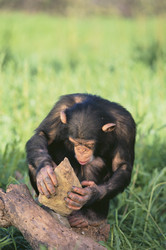
Enhancing our understanding of evolution and discovering how species continue to adapt and evolve can help us to better know ourselves and our world and even give us a glimpse into what may be in store in the future. EU-funded researchers are delving into research on animal evolution from a range of different perspectives. You might be surprised to learn that the pig and its cousin the wild boar share a lot with humans. And an analysis of their DNA carried out by Prof. Martien Groenen with the EU-funded BATESON project revealed new, unexpected and potentially beneficial similarities with humans, which further support the pig as a valuable biomedical model in studies on human disease. In total, the team found 112 positions where the porcine protein has the same amino acid that is implicated in a disease in humans, which could have exciting implications for research on diseases such as diabetes and Alzheimer’s. Meanwhile, researchers with the GENEFLOW project are asking an evolutionary question which is deeply pertinent today. What are the consequences of the gene flow between species and populations? As environmental barriers to movement across habitats that have persisted since the last ice age now break down, we are witnessing gene flow among previously isolated populations and even hybridisation between species. The GENEFLOW team asks: How important are environmental barriers between species and populations now and in the future? This week’s edition of CORDIS takes a look at these and other EU-funded projects on evolution, as well as related news. - In the footsteps of Darwin: pigs DNA sheds light on evolution and selection(opens in new window) - Beyond DNA changes in primate evolution(opens in new window) - Genes affecting social behaviour in ants(opens in new window) - Animal coloration through deep time: evolutionary novelty, homology and taphonomy(opens in new window) - The role of nuclear gene flow in the evolutionary history of Pleistocene mammals(opens in new window) - Trending science: Animals’ eyes may reveal place in the pecking order(opens in new window)
Countries
Austria, Belgium, Bulgaria, Cyprus, Czechia, Germany, Denmark, Estonia, Greece, Spain, Finland, France, Croatia, Hungary, Ireland, Italy, Lithuania, Luxembourg, Latvia, Malta, Netherlands, Poland, Portugal, Romania, Sweden, Slovenia, Slovakia, United Kingdom