


Novel tech for next-generation green agriculture

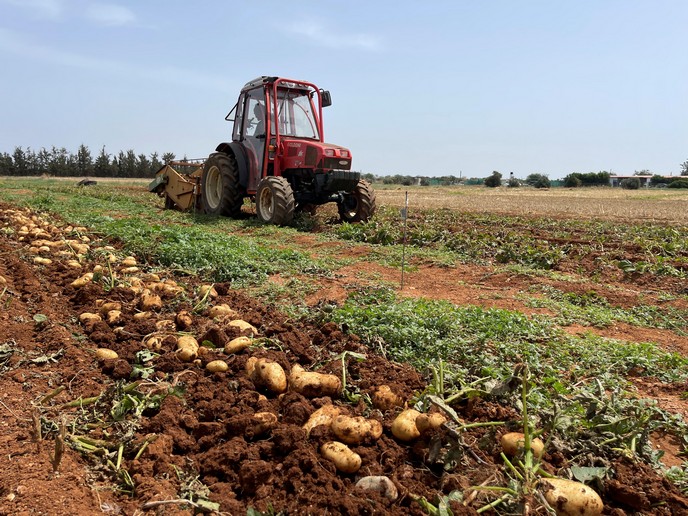
One of agriculture’s most pressing environmental challenges is nutrient pollution. Excess nitrogen and phosphorus from manure, slurry and synthetic fertilisers are over-fertilising soils and contaminating water and air, contributing to biodiversity loss, eutrophication and climate change. The ECONUTRI(opens in new window) project is tackling this problem with 24 technologies and nature-based solutions that minimise or even eliminate nitrogen and phosphorus losses from soil. The outcomes align with the European Green Deal’s goal to cut nutrient losses by 50 % by 2030.
Halting nutrient losses
Since its launch in 2022, the project has successfully developed and validated 10 different technologies designed to reduce nitrogen and phosphorus losses from organic biowastes. “A key achievement is the systematic coverage of all critical stages of nutrient loss along the agricultural production and biowaste management chain, including manure and slurry storage, anaerobic digestion, digestate separation, composting processes and soil application,” comments Dimitrios Savvas, professor at the Agricultural University of Athens (AUA) that is coordinating the project. “Through this integrated approach, we show that nutrient emissions can be significantly reduced while simultaneously recovering, stabilising and valorising nutrients from biomass waste by converting them into agronomically valuable products.” With respect to management of biomass occurring from barns, key results include acidifying animal slurry with sulfur to reduce ammonia emissions, with reductions between 30 and 35 % recorded during storage and composting, while also enhancing nitrogen retention. High nutrient recovery efficiencies were also achieved, particularly for phosphorus and ammonium, through struvite precipitation from the liquid fraction of biodigestate, with recovery rates of up to 92 % for phosphate and 66 % for ammonium. Other achievements include improved nutrient stabilisation during composting with selected beneficial microbial inocula and the correction of unbalanced nitrogen/phosphorus ratios in biowaste-derived fertilisers – a critical issue in regions with high livestock density. To mitigate nitrate and phosphorus losses from fertiliser, ECONUTRI developed nine novel technologies. These include the NUTRISENSE decision support system (DSS) developed by the AUA team, the Veg-Sys DSS developed by the University of Almería, and the Virtual Lysimeter developed by Wageningen University & Research. The three DSSs deployed by ECONUTRI are aimed at supporting growers in applying economically viable and environment-friendly fertilisation practices in soil-grown and soilless horticultural crops through data and sensor-driven nutrient management. By dynamically adjusting fertiliser inputs to crop demand, in pilot tests the three DSSs contributed to substantial reductions in water, nitrogen and phosphorus use, which, indicatively, in soil-grown cucumber crops managed with the NUTRISENSE DSS reached 45 and 54 %, respectively. Furthermore, the same DSS improved the nitrogen and phosphorus use by 16 to 21 % and 5 to 46 % in soilless cucumber crops that took place during two consecutive years. Overall, the technologies demonstrated significant reductions in irrigation and fertiliser use and increases in water and nutrient use efficiency.
Reducing emissions
Eight ECONUTRI tools and technologies focused on mitigating greenhouse gas and ammonia emissions in barns, manure storage systems and fields. In dairy barns, biochar and frequent floor cleaning lowered ammonia emissions, while frequent manure removal from the pit in pig barns was found to cut methane emissions. In manure storage and composting, biochar treatment, and especially nanobiochar, showed significant potential for reducing nitrogen losses. Fertiliser alternatives and additives were also tested in arable fields, variable cropping systems and greenhouses, leading to measurable reductions in ammonia and nitrous oxide emissions ranging from 20 to 60 %. ECONUTRI (Innovative concepts and technologies for ECOlogically sustainable NUTRIent management in agriculture aiming to prevent, mitigate and eliminate pollution in soils, water and air) is now focusing on integrating the tools into a cohesive nutrient management system and upscaling the technologies for commercial deployment. “A next step is to make the tools fully available and accessible to growers,” states Savvas. Through these efforts, the project will help reduce dependence on mineral fertilisers and make agricultural systems more resilient to volatile markets. If you are interested in having your EU-funded project featured as a ‘Project of the Month’, please send us an email to editorial@cordis.europa.eu and tell us why!