


Accelerating trustworthy AI for Europe’s energy transition


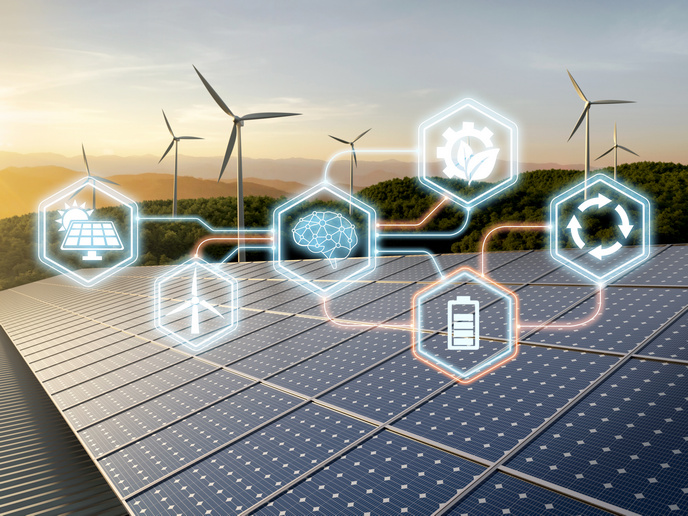
As Europe races towards its climate neutrality goals, integrating AI into its energy systems promises to boost efficiency, resilience and sustainability. But how safe is the deployment of AI in critical infrastructure? To ensure safety, reliability and compliance with EU regulations, the EU-funded AI-EFFECT(opens in new window) project is building a European testing and experimentation facility (TEF) designed to speed up the development and adoption of trustworthy AI solutions in the energy industry. The TEF is a novel virtual network linking existing laboratories and computing resources across multiple EU countries. It provides standardised testing environments, risk and certification workflows, and replicable methods for developing, testing and validating AI applications for critical energy infrastructures in diverse, real-world conditions.
Tackling four critical areas of the energy system
The facility operates through four key national nodes – in Denmark, Germany, the Netherlands and Portugal – each focusing on specific energy challenges. The Danish node, led by AI-EFFECT partner Technical University of Denmark, is tasked with testing AI in both virtual and physical multi-energy systems. It will show how AI can coordinate electric power grid operations with district heating systems in the Triangle Region in Jutland and on the island of Bornholm in the Baltic Sea. In the Netherlands, the node anchored at project partner Delft University of Technology extends the university’s ‘control room of the future’(opens in new window) with AI capabilities to address grid congestion – a pressing issue as the share of renewable generation in grids rises. The Portuguese node, led by research partner INESC TEC, is addressing the issue of privacy concerns and connectivity gaps by creating a trusted local energy data space for secure, consent-based energy data sharing. In this space, consumers and prosumers will be able to manage data rights and permissions in line with EU regulations while collaborating with AI-driven service providers on co-creation and testing. Last but not least, in Germany, the node led by applied research organisation Fraunhofer – another AI-EFFECT partner – is focusing on AI for power distribution systems in order to optimise grid performance. By developing a near-realistic cyber-physical model, it aims to benchmark AI performance in congestion management and distributed energy resource integration against traditional engineering approaches. “Together, these four nodes form the backbone of AI-EFFECT’s mission to make AI a trusted partner in Europe’s energy transition,” writes Alberto Dognini of project coordinator EPRI Europe, Ireland, in an ‘Enlit’ news item(opens in new window). He adds: “From optimising multi-energy systems to enabling secure data sharing and improving grid resilience, these nodes will accelerate innovation while reducing risk for operators and consumers alike.”
Sharing knowledge
AI-EFFECT (Artificial Intelligence Experimentation Facility For the Energy seCTor) is disseminating its findings and engaging with the broader community through initiatives such as the EPRI Current Podcast, as in the episode ‘Exploring the AI-EFFECT on Europe’s Energy Future’(opens in new window). In this discussion, experts delve into the architecture and building blocks enabling distributed nodes across multiple countries and explore how the TEF is shaping the future of Europe’s energy systems. The episode highlights the importance of collaboration in accelerating AI adoption in the energy sector and creating a resilient and sustainable grid. For more information, please see: AI-EFFECT project website(opens in new window)
