


Living sensors meet robotics for aquatic biodiversity monitoring

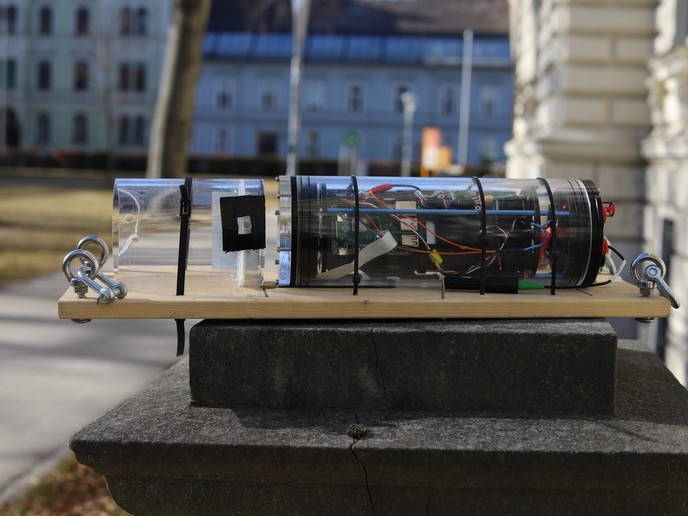
Imagine robots that use living organisms as sensors, continuously monitoring the health of lakes and oceans. The EU-funded BioDiMoBot(opens in new window) project is working towards this vision through the development of biohybrid robots that combine biology, engineering and artificial intelligence to monitor biodiversity and water quality in a novel way. Traditional monitoring of aquatic biodiversity relies largely on technical sensors and laboratory-based chemical analyses that are expensive, labour-intensive and typically carried out at isolated time points. While these methods provide precise measurements of individual parameters, they often miss the biological responses that reflect how ecosystems function. “BioDiMoBot was designed to address these limitations by developing biohybrid monitoring systems that use living organisms as sensing elements, thereby complementing existing technologies with biologically integrated, cost-effective and scalable monitoring solutions,” says project co-coordinator and biologist Wiktoria Teresa Rajewicz.
Living sensors in action
BioDiMoBot’s system combines advanced sensors with optic and sensing technologies in novel ways. Living aquatic organisms are embedded as biohybrid sensors. “Biohybrid sensors combine the sensitivity of living organisms with the robustness of electronic systems,” explains Rajewicz. “Coupled with optical and electronic readout units, they allow us to automatically record their behavioural and physiological responses to multiple environmental stressors and transmit them in real time as digital data.” One example is a Daphnia module, which combines a small cage hosting Daphnia – commonly known as water fleas – with an electronic core containing a camera and a single-board computer. As water flows through the cage, the system records the animals’ swimming behaviour and analyses it automatically. Changes in their movement patterns provide information on the combined effects and bioavailability of substances in the environment, offering direct insight into water quality. The system’s data streams can reveal early warning signals of ecosystem stress and long-term ecological trends. “This kind of data supports climate change impact assessment, informs adaptive management strategies and helps guide mitigation and conservation actions,” adds Rajewicz.
Tracking environmental change over time
Understanding aquatic ecosystems requires observation over long periods, as environmental pressures linked to climate change can emerge slowly, appear only during extreme events or result from several stressors occurring simultaneously. Monitoring based on short-term or occasional sampling poses a risk of overlooking trends, thresholds or early warning signals of ecosystem degradation. Instead of measuring isolated parameters, the project’s approach, which relies on living organisms, reflects how environmental conditions are experienced by aquatic life as a whole. These organisms capture the effects of physical, chemical and biological factors over time. As Rajewicz says, “By enabling continuous, real-time observation without the need for frequent human intervention, BioDiMoBot’s autonomous biohybrid systems provide a more holistic and temporally resolved understanding of ecosystem health and aquatic biodiversity.” BioDiMoBot builds on earlier work from the Robocoenosis project, shifting the focus to broader biodiversity and water quality monitoring. While the full prototype is currently under development, key system components have already been partially validated. The project’s biohybrid systems were tested both in controlled laboratory conditions and in real freshwater environments, including Lake Millstatt(opens in new window), Lake Neusiedl and local ponds in Austria, as well as bays in Greenland. Field trials evaluated system stability, data quality and organism responses under natural environmental variability. Preliminary results have been encouraging, showing that biohybrid monitoring systems can operate reliably over extended periods while capturing biologically meaningful responses to environmental change. These findings demonstrate how biohybrid robots could complement existing monitoring approaches, supporting more informed biodiversity assessment and climate change research.