Exploiting 3G to improve emergency services

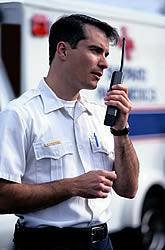
The first generation of wireless communications used analog voice signalling. Quality improved greatly during the transition to second-generation networks, which employed digital voice encoding. The evolution continues today with third generation wireless communications, also known as 3G. The main advances include increased bandwidth, dramatically higher data transfer speeds and routing flexibility. The improved features of 3G opens the door to a new wave of services to its users, such as downloading and viewing of video and location-based services. The XMOTION project, sponsored by the IST Programme, investigated new opportunities created by 3G, specifically in the emergency services application area. Emergency service workers must react quickly in difficult situations. XMOTION participants exploited the increased carrying capacity of 3G to allow videoconferencing between ambulance paramedics and doctors back at the hospital. It is even possible to transmit the patient's vital signals while en route to the emergency room. Another trial investigated the potential of 3G in assisting firefighters. Knowledge of a particular structure's floor plans can help firefighters isolate a blaze, more easily find persons trapped inside and avoid deadly traps. This information can be downloaded to a personal digital assistant at the scene. Another direction of research is the development of wearable sensors that monitor environmental conditions that may be dangerous to firefighters (e.g. lack of oxygen). The transfer of precious or potentially dangerous cargo is another attractive application area for 3G. Pinpointing the exact location of the goods is crucial for managing an emergency response (e.g. chemical spill). Surveillance via streaming video was also demonstrated and could be used during hijack situations. The possibilities are nearly limitless. Yet one important lesson learned from end users in XMOTION is the importance of reliability for emergency services. The network infrastructure must be extremely robust. The initial results are positive and will contribute to saving the lives of both those providing and those receiving emergency services.