Learning from the economic progress of predecessors

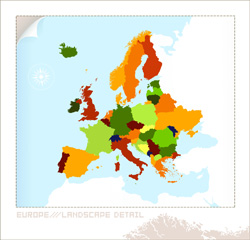
There is little comparative research covering NIS (Belarus, Kazakhstan, Moldova, Russia and the Ukraine) and NMS with regards to their transitioning economies. The ‘Industrial restructuring in the NIS: experiences of and lessons from the new EU Member States’ (Indeunis) project analysed the two groups of countries with regards to recent patterns in industrial and trade restructuring, foreign direct investments (FDI) and economic integration relative to the EU. Researchers were interested in determining the role played by varying degrees of economic integration in the progress of economic transition and restructuring. They also looked at foreign investment activities, focusing in particular on innovation activities, technology transfer, management practices and changes in production and trade specialisation. Indeunis also sought to explore the potential for closer economic cooperation between the enlarged EU and its NIS neighbours and opportunities for closer economic integration in the NIS. To fill in research and knowledge gaps, an international research consortium was created to analyse the above issues and arrive at clear-cut conclusions that can contribute to policy dialogue and recommendations. Work highlighted the considerable progress made by Russia and other NIS in both restructuring and integration. It was also revealed that although the NIS lags behind NMS in reforms and restructuring, they are following fairly similar transition paths. Study results in this area of investigation were used to elaborate policy recommendations for NIS: follow the reform path of NMS and complete policy transition, and seek out the best available external anchor. Despite a small lag in institutional development, positive structural change and related future policy implications support ongoing steady progress in market reforms for NMS. In addition, an analysis of the experiences of the NMS showed that creating general economic circumstances favourable for both domestic and foreign investors is crucial. Unfortunately, this has not been the case in the NIS and thus sustainable economic, industrial and trade development has been laggard. Lacklustre FDI inflows to the NIS were also deemed a serious deficiency. Regarding economic integration and cooperation, conditions must be established to allow for further mutual liberalisation and a boost in industrial cooperation. Both the EU and Russia need to develop a coordinated policy of neighbourhood aiming at a Common European Economic Space (CEES). The significance of the results of the Indeunis project to the scientific community, policymakers and the broader public will help raise awareness regarding the importance of trade and FDI for restructuring as well as NIS economic integration in the EU.