A closer look at the (welding) keyhole

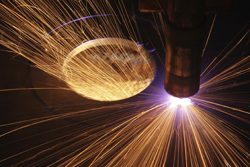
Laser welding is a successful joining process widely used to produce good welds in steel. Application to non-ferrous metals such as aluminium and titanium that are of particular importance to light-weight transportation concepts is plagued by problems related to porosity of the weld. High levels of porosity at deep penetrations compromise weld strength and integrity.Use of state-of-the-art high-brightness lasers with better beam quality, flexibility and cost effectiveness is a promising solution yet there is little related data available. To establish a firm foundation for development of the technique, EU-funded scientists are characterising beam–materials’ interactions within the scope of the project 'Prediction and control of porosity in laser welding of non-ferrous metals' (PCPLAS). The team is using a combination of modelling and experiments, the latter of which provide fundamental insight into real behaviours and input to the models and also serve to test algorithms. Scientists have progressed to a complex model of keyhole formation critical to porosity. The keyhole must be large enough to enable penetration of the weld materials but not so large that materials leak out of the weld joint. High-speed video imaging was used to monitor the actual characteristics and flow patterns associated with keyhole formation and the weld pool.Experimental welding trials demonstrated that porosity of the selected aluminium and titanium alloy decreased with increasing laser power or decreasing welding speed. Researchers suggest that, in low-power conditions, measures to reduce keyhole diameter, such as the use of a more focused laser beam, could help reduce porosity.These light-weight alloys could significantly reduce fuel consumption and emissions in the aerospace and automotive sectors but problems with porosity of welds have inhibited some applications. Thanks to insight from the new experiments and models, end users may soon have guidelines for use with major benefits for the transportation sector and the environment.