Simple and cost-effective control of crystal preparation

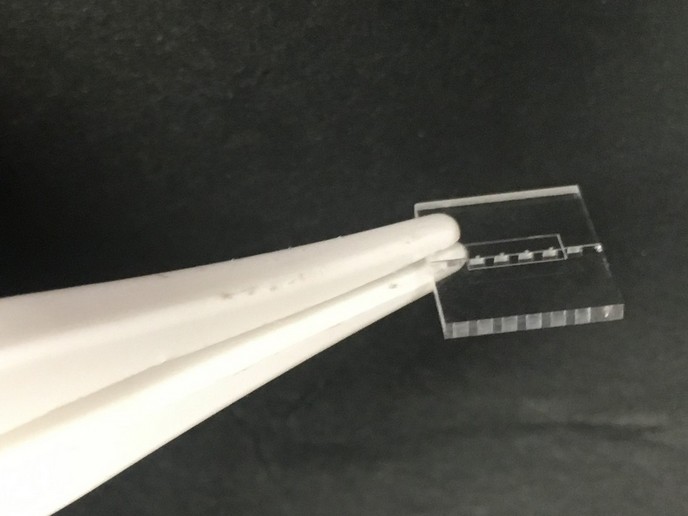
Scientists at the Faculty of Electrical Engineering of the Czestochowa University of Technology in Poland set out to develop a novel manufacturing method to enhance the properties of crystalline materials with the EU-funded project TEMESAMA(opens in new window) . The objective was to increase efficiency and stability for enhanced control or modulation of high-power lasers in electro-optic or non-linear optical cells. Success depended strongly on creating or updating the necessary experimental and measurement facilities. All relevant technological advances have been protected by a Ukrainian patent and work is underway for submission of a Polish patent application. Researchers installed an electro-optic interferometric setup and developed a technique for quality control measurements in optical slabs during manufacture. Investigators elaborated necessary techniques to measure linear electro-optic tensor coefficients and modernised the existing non-linear optics setup. With both setups functional, scientists studied the characteristics of the anisotropic materials langasite, pure lithium niobate crystals and magnesium oxide-doped lithium niobate crystals. Having developed complete sets of linear and non-linear tensor constants for the materials, the scientists were able to mathematically derive important information about the 3D spatial anisotropy of electro-optic and acousto (piezo)-optic effects. Theoretical results confirmed in some experiments highlighted the mismatch between principal physical crystal directions and the geometries needed to maximise electro- or acousto-optic efficiency. Outcomes point the way to opportunities to increase efficiencies in optoelectronic devices. Using tailor-made software, investigators also performed an analysis of the directional stability of materials in the face of uncontrolled changes in material parameters. Results will be welcomed by the crystal community as maximum effects are also characterised by maximum stability. Technology enables fast and cost-efficient preparation of electro-optic, piezo-optic or non-linear optical crystalline materials with optimised efficiencies and parameter stability. Preparation of known and new crystalline materials using the techniques is expected to have major market impact on the control and/or conversion of super-powerful laser radiation of key importance to the EU optoelectronics industry. It also opens the door to a flurry of innovation to develop novel systems and devices.