


How to create a knowledge policy - Busquin
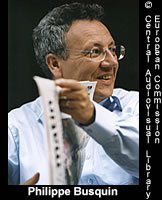
Speaking at a Sciences Politiques event in Paris, France on 19 October, EU Research Commissioner Philippe Busquin stressed the importance of defining a policy for knowledge in Europe and identified five factors which need to be addressed in creating one. The five issues confronting the development of a knowledge policy are, according to Mr Busquin sustainable development, divisions between the needs of developed and developing countries, higher education, intellectual property rights (IPR) and science and society. A knowledge policy consists of measures permitting the stimulation of the production of knowledge by research, its transmission through education and its diffusion and exploitation through innovation, in socially desirable conditions according to certain political ideals, said Mr Busquin. He explained that, in his opinion, knowledge is fundamentally different to information. It is 'information intellectually structured and socially organised, a dynamic reality, a process as much as a gift,' he said. A knowledge policy is confronted by and must respond to five issues, said the Commissioner. Sustainable development was the first area selected by Mr Busquin - actions which contrast the needs of industrial competitiveness and the requirements of quality of life in terms of health, security and the environment. Although he claimed that such contradictions could theoretically be resolved by sustainable development, he highlighted the inadequacy of this term, stating that currently it is little more than a concept which needs to be translated into actions. In the same sense, the second issue confronting a knowledge policy is the tension between the needs of developed societies and those of the rest of the world, said Mr Busquin, referring to the prevalence of medical research for illnesses endemic in the West. He stressed the importance of stimulating research into problems facing the global population, and said that this is what Europe is trying to do by launching an initiative to tackle transmissible diseases rife in those areas confronted with poverty. Mr Busquin underlined his third category, higher education, as particularly important, saying that higher education establishments have been consigned a central role in the knowledge society.' The fourth category identified by the Commissioner as vital in the construction of a knowledge policy was intellectual property rights (IPR). The number of patents awarded in Europe, the USA and Japan has grown by 8 to 10 per cent every year for the last five years. In terms of financial consequences for institutions, the impact in terms of royalties varies from a few per cent of financial resources in universities to 44 per cent for an institution like the Pasteur Institute, said Mr Busquin. This growth in the number of patents raises questions such as what sort of knowledge is it legitimate to protect in this way, how to avoid restricting public access to information and in domains such as life sciences, and identifying the line between discovery and invention. Finally, Mr Busquin stressed the importance of the science/society issue for creating a knowledge policy. He cited a recent survey indicating European citizens' ambivalence to technological progress. 'At the same time, a good number of them think that science is changing their lifestyle too quickly,' he said. The European Commission embraces both precaution and proportionality, meaning that all decisions are taken according to what is perceived as a socially acceptable risk, said Mr Busquin. He called for a debate on this issue between researchers, citizens and political decision makers at European level, although he was keen add that this debate should not release politicians from the responsibility of holding an open dialogue, making informed decisions and then executing them with resolve.