



The violent legacies of the Great War

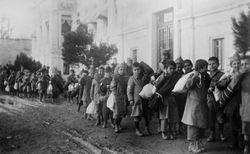
Did the Great War really end in November 1918? The LIMOD (The limits of demobilization, 1917-1923: Paramilitary violence in Europe and the wider world) project set out to answer this question by adopting a perspective that included eastern Europe and the wider world. Studies on WWI are usually made according to divisions of national identity or ethnic difference, and Germany, France and the United Kingdom are usually privileged in the literature. The project attempted to contribute to the construction of a global history of the Great War's immediate aftermath, which is still lacking, despite recent attempts. Indeed, WWI was a phenomenon that crossed frontiers and left common-themed legacies. In eastern Europe, the consequences of the post-war period and the violent conflicts, revolutions and civil wars that erupted during the period spanning 1917 to the early 1920s resulted in 4 million deaths. Strong anti-colonial movements and the oppressive responses across the wider world also contributed to this violent transition from war to peace. Researchers investigated these conflicts using an empirical and comparative methodology. They attempted to explain why the violence continued in some former combatant states well after 1918 whereas other states experienced a more successful transition to peace. A diverse range of case studies was included in the project, such as Poland and Ireland, the Baltic States, the Ottoman Empire, India and the Middle East. Affiliated researchers also examined former combatant states like Australia, China, Japan, Latin America and the United States. LIMOD compiled a more complete image of the state of societies around the world during the post-war period, the reasons why violence was so widespread and the long-term legacies that the Great War left. Key project results have been published in peer-reviewed articles, monographs and two edited books. Another monograph is pending publication.