Hypoxia-activated regulation of gene expression

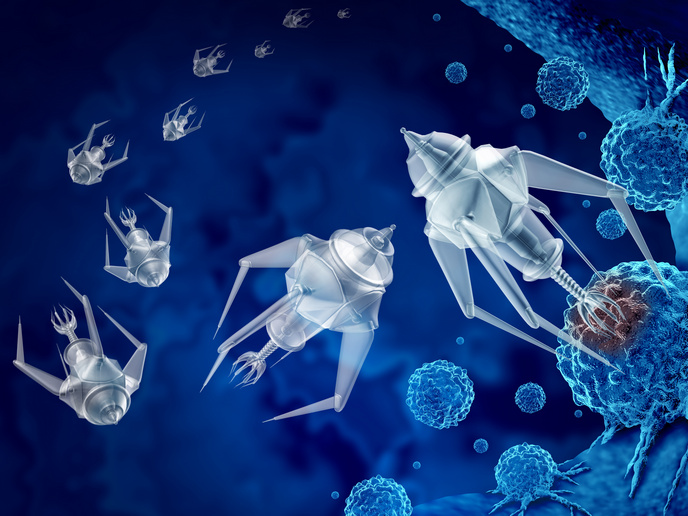
A growing tumour rapidly outgrows its blood supply creating regions where the oxygen concentration is significantly lower than in healthy tissues. Hypoxia occurs in most of the solid tumours and correlates with poor prognosis for patients. Bacterial infections leading to biofilm formation also create hypoxic conditions and are relevant in the case of opportunistic infections. The specific qualities that distinguish tumour cells from healthy ones' present opportunities for targeting therapies. The EU-funded HYPOXPROBE (The development of hypoxia-activated probes for imaging and therapy) project attempted to develop prodrugs that selectively release inhibitors of cancer-related enzymes under hypoxia. Effective application of hypoxia-activated prodrugs (HAPs) requires the development of a system that can effectively image hypoxia gradients in bacteria and mammalian cells. Researchers tried to use novel hypoxia-activated small molecule inducers of gene expression. In this system, the fluorescent protein would only be expressed when the small molecule inducer is released by removal of the hypoxia-activated group. The green fluorescent protein served as the reporter gene under the control of the lac operator. Preliminary experiments established the background for the development of this approach. The checkpoint kinase, Chk1, is an important chemotherapeutic target. Researchers aimed to develop their model HAP based on the Chk1 inhibitor SAR020106. They employed the nitro-imidazole group for the successful synthesis of the bio-reductive prodrug by conjugation of the nitro-imidazole moiety to SAR020106. Project activities led to the development of the first hypoxia-inducible prodrug that needs to be further tested in cancer cells. A noteworthy accomplishment, this has significant implications for cancer and anti-bacterial therapy.