Reintegration for children born of war

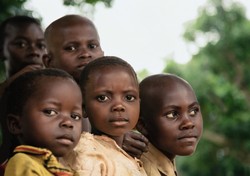
Children born of war in Africa have been left out of disarmament, demobilization, and reintegration (DDR) programmes by both state and non-state actors even though there are policies directed at reintegrating ex-combatants. There are challenges encountered with reintegrating ex-combats back into civilian society. This is mainly because reintegration can be difficult to monitor. Because of its social nature, it is difficult to measure the societal cohesion of DDR. In an effort to alleviate these struggles, the EU-funded project CAWRBP (Children and war: Resilience beyond programmes) focused on policies that governmental and multinational agencies have applied in DDR after the civil wars in Sierra Leone, northern Uganda, eastern Congo and Darfur. Identifying and analysing the situation of ‘(re)integrated’ ex-combatants and their children born out of rape by enemy soldiers was the first step. CAWRBP then compared social (re)integration policies and practices associated with study the communities. Researchers reviewed the results of the case studies against policies used for reintegrating ex-combatants in post-conflict African communities. They then developed a set of guidelines for the social integration of children born of war. The guidelines were tested and refined in northern Uganda. Findings proved that children born of war in most African societies were faced with challenges – namely, negotiating their way through existing patriarchal customary doctrines of identity. Such customary policies and practices are very influential on the prevailing formal legal systems of children’s rights nationally and internationally. Project results have been disseminated through a series of articles that were peer-reviewed for publication in social science journals as well as at high-level global meetings. The work will be useful in building scholarship for improvement of social (re)integration policies and practices globally.