


Scientists develop magnetic nanoswitch that could end computer overheating
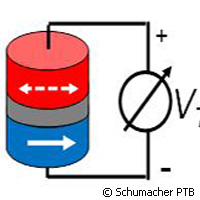
Many of us have discovered to our detriment the regrettable effects of leaving a laptop on a bed or a couch for too long, with a worrying whirring sound being the first thing to raise the alarm that the tiny computer processors inside are overheating. But this heat could soon not be a problem thanks to new findings from a team of German researchers. Writing in the journal Physical Review Letters, the team explain how they discovered that it is possible to control an effect in nanojunctions, small components based on magnetic tunnel structures, that could lead to discovering how to switch these processors on and off more easily or to store data more efficiently. This research received a EUR 21 million boost from the IMERA-Plus ('Implementing metrology in the European research area -Plus') project, part of the 'People' Theme of the Seventh Framework Programme (FP7). At the moment, magnetic tunnel structures are already used in various areas of information technology. They are used, for example, as magnetic storage cells in non-volatile magnetic memory chips, 'MRAMs' (Magnetic Random Access Memories) as well as highly sensitive magnetic sensors to read out the data stored on hard disks. Following this new discovery by the German team, in the future they could also be used for monitoring and controlling thermoelectric voltages and currents in highly integrated electronic circuits. Magnetic tunnel structures consist of two magnetic layers separated only by a thin insulation layer that is approximately 1 nanometre wide. The magnetic orientation of the two layers inside the tunnel structure has a great influence on its electrical properties. If the magnetic moments of the two layers are parallel to each other, the resistance is low and if they are opposed to each other, the resistance is high. The change in the resistance when switching the magnetisation can amount to more than 100%. It is therefore possible to control the electric current flowing through the magnetic tunnel structure efficiently by simply switching the magnetisation. The team has managed to show that, besides the electric current, the thermal current flowing through the tunnel structure can also be influenced by switching the magnetisation. So now the energy from waste heat in computers could soon be used and converted in a targeted way. The main aim of the IMERA-Plus project is to make new ground in our understanding of metrology (the science of measurement). To drive innovation within a knowledge-based economy, ever more precise and reliable measurements are essential. If we cannot measure something then we do not understand it properly and as a result cannot control nor manufacture it reliably.For more information, please visit:Physikalisch-Technische Bundesanstalt (PTB):http://www.ptb.de/index_en.html
Countries
Germany