


EU-funded study says flexible brains help train bodies to use prosthetics
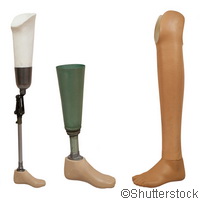
Scientists working on the development of thought-controlled prosthetic devices for people recovering from spinal cord injuries or an amputation will be pleased to read a new EU-funded study that shows the brain is more flexible and trainable than was previously thought. Writing in the journal Nature, a team of Portuguese and American researchers explain how through a process called plasticity, parts of the brain can be trained to do something they normally wouldn't do. The team found that the same brain circuits used for learning motor skills, such as riding a bike or driving a car, can be used to master purely mental tasks, even arbitrary ones. This is also the first study to successfully rule out the role of physical movement when learning to use a prosthetic device. One of the study authors, Dr Rui Manuel Marques Fernandes da Costa from the Champalimaud Centre for the Unknown in Lisbon, Portugal, was awarded a European Research Council (ERC) Starting Grant to the tune of more than EUR 1.5 million for work carried out on his NEUROHABIT ('Neural mechanisms of action learning and action selection: From intent to habit') project, which contributed to the study. Another study author, Jose Carmena from the University of California, Berkeley in the United States comments on the study results: 'What we hope is that our new insights into the brain's wiring will lead to a wider range of better prostheses that feel as close to natural as possible. They suggest that learning to control a BMI (brain-machine interface), which is inherently unnatural, may feel completely normal to a person, because this learning is using the brain's existing built-in circuits for natural motor control. This is key for people who can't move. Most brain-machine interface studies have been done in healthy, able-bodied animals. What our study shows is that neuroprosthetic control is possible, even if physical movement is not involved.' The experiment carried out by the team involved seeing if rats could complete an abstract task if overt physical movement was not involved. The researchers decoupled the role of the targeted motor neurons needed for whisker twitching with the action necessary to get a food reward. The rats were fitted with a brain-machine interface that converted brain waves into auditory tones. To get a food reward, the rats had to modulate their thought patterns within a specific brain circuit in order to raise or lower the pitch of the signal. Auditory feedback was given to the rats, so that they learned to associate specific thought patterns with a specific pitch. Over a period of just two weeks, the rats quickly learned that to get food pellets, they would have to create a high-pitched tone; to get sugar water, they needed to create a low-pitched tone. If the group of neurons in the task were used for their normal function, whisker twitching, there would be no pitch change to the auditory tone, and no food reward. 'This is something that is not natural for the rats,' comments Dr. Costa. 'This tells us that it's possible to craft a prosthesis in ways that do not have to mimic the anatomy of the natural motor system in order to work.' Researchers hope these findings will lead to a new generation of prosthetic devices that feel natural and can be used without patients having to think too hard about moving a robotic limb.For more information, please visit:University of California - Berkeley:http://www.berkeley.edu/
Countries
Portugal, United States