Detecting and capturing contrast agents in water sources


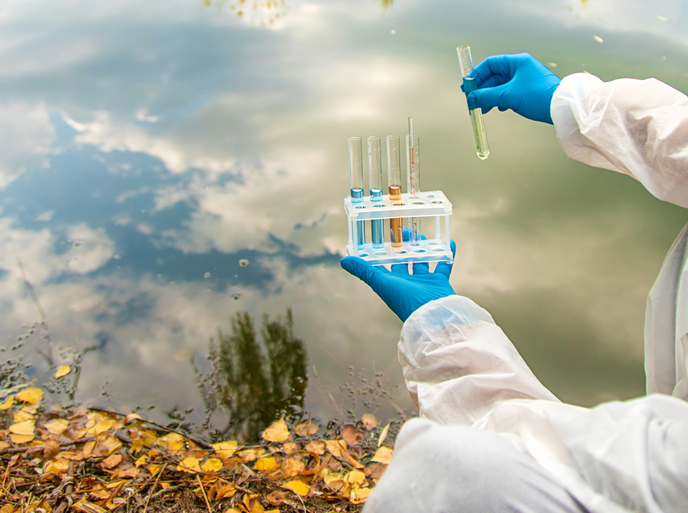
Contrast media agents (CMAs) are used in medical imaging procedures such as X-rays, magnetic resonance imaging, and computed tomography. They temporarily alter the way diagnostic tools interact with the body, thus improving the images produced and resulting in more accurate clinical assessments. However, CMAs are classified among the most persistent pharmaceutical contaminants(opens in new window). Even though they enter aquatic ecosystems in relatively low concentrations, they lead to the accumulation of toxic by-products that are harmful to health and the environment. The REMEDI(opens in new window) project, funded by the Marie Skłodowska-Curie Actions programme, brought together academic and industrial partners to address the growing challenge of pharmaceutical pollution in our water systems.
Understanding CMA behaviour
The high usage of CMAs and their chemical stability create barriers to their removal with conventional water treatment methods. To find effective remediation techniques, the REMEDI team first sought to examine CMA behaviour using a combination of laboratory experiments and numerical modelling. The aim was to assess CMA mobility and retention across different porous media and natural water environments, including lakes, springs, and groundwater wells. “Our work revealed that CMAs are highly persistent, their mobility being influenced by interactions with water chemistry and the physical properties of sediments and porous materials,” says project coordinator Alberto Guadagnini. “These insights allowed us to understand the mechanisms controlling CMA transport, binding, and recovery in aquatic systems,” Guadagnini adds.
A new class of remediation materials
The next step was to seek out materials to effectively bind CMAs in water. REMEDI first tested iron(Fe)-containing by-products, which, while initially promising, ultimately did not perform as expected. Focus then shifted to developing and optimising alternative adsorbent materials such as granular activated carbon and modified clays. These materials, chosen for their stability, selectivity, and adaptability, proved to be very effective in capturing CMAs. Building on this finding, the project developed a recovery method based on filtration and adsorption, whereby contaminated water passes through filters containing the reactive materials, which trap CMAs while allowing clean water to flow through. “By optimising flow conditions, filter geometry, and material properties, we were able to improve the interaction between the CMAs and the adsorbent, enabling more efficient removal and potential recovery of CMAs for reuse,” explains project manager Giovanni Porta. The CMAs can potentially be recovered from the sorbent filter, securing the supply of critical pharmaceutical products, or they could be repurposed for industrial applications. This circular use will reduce waste and limit resource consumption.
Laying the groundwork for practical application
Merging machine learning, physics-based models and experimental evidence, REMEDI aimed to prepare the ground for translating findings into real-world settings. The project team highlighted key considerations that will guide on-the-ground applications: these include complex water composition, low contaminant levels requiring highly selective materials for efficient capture and recovery, and long-term material durability. REMEDI also carried out a study across medical centres to assess awareness of CMA-related environmental impacts, which revealed limited knowledge on behalf of healthcare practitioners. This observation presented a significant opportunity: raising awareness among the medical community could encourage the use of proactive measures alongside technology to reduce CMA impacts in water ecosystems. Such measures could include, for example, post-examination urine collection to evaluate CMA concentrations as well as advanced CMA handling practices. Ultimately, REMEDI insights could guide policy towards advanced filtration and contaminant recovery methods, as well as new purposes for CMAs, initiating more sustainable practices in both healthcare and environmental settings.