How dye-sensitised solar cells could revolutionise solar energy


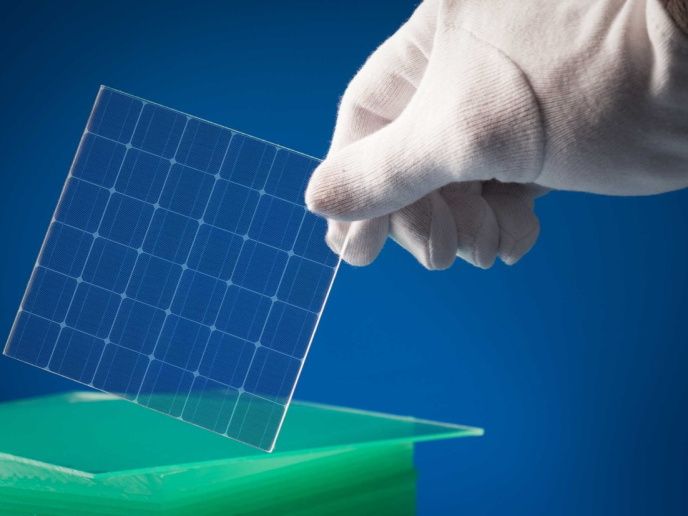
Semi-transparent solar cells offer the possibility of integrating energy harvesting into the surfaces of buildings and vehicles. Several new technologies have emerged in recent years, though most have fixed levels of transparency and cannot adapt to variable weather and sunlight. Dye-sensitised solar cells (DSSCs) are a promising, cost-effective and self-adjustable solution that could extend Europe’s solar energy footprint further. “Dye-sensitised solar cells can be semi-transparent and fabricated in a wide range of colours, giving them aesthetic versatility and making them especially attractive for building-integrated photovoltaics, such as windows and facades,” explains Renaud Demadrille(opens in new window), research director and team leader at the Atomic and Alternative Energies Commission(opens in new window) (CEA) in France. In the PISCO project, which was funded by the European Research Council(opens in new window), Demadrille and his team built on a previous novel proposal to combine photochromism and photovoltaic concepts, creating the first efficient semi-transparent solar cell that could optically tune itself in varied light and weather. In PISCO, the team further developed this concept, creating a new class of solar cells which incorporate these twin properties. “Our work has demonstrated that the two seemingly incompatible phenomena, of photochromism and photovoltaics, can be combined in a single device using a single type of molecule,” says Demadrille.
Self-tunable dye-sensitised solar cells
DSSCs are relatively simple devices that consist of a layered semiconductor that can adsorb dye and conduct solar-generated electrons to an electrode. The dye increases sensitivity to sunlight and transfers electrons to the semiconductor. The third component, an electrolyte, regenerates the dye and completes the circuit. The entire system is enclosed between two transparent conducting electrodes. Thanks to PISCO, the team has developed this technology with the aim of integrating it on a large scale in buildings, transportation and agrivoltaics in the future, taking advantage of its variable and self-adaptive transparency. “These cells have been demonstrated to possess the capacity to modulate their light absorption and darkening in response to higher light intensities, thereby augmenting electricity generation, without any external manipulation,” Demadrille explains.
A new class of photovoltaics
One of the most significant outcomes of the project is the development of a new class of self-tunable photovoltaic devices. “By engineering the new photochromic dyes at the molecular level, we have created transparent solar cells with rapid colouring and decolouring processes, as well as a high colour rendering index,” adds Demadrille. “This offers good visual comfort for the users, and simultaneously allows for the production of electricity.” The work also advanced the broader field of DSSCs, including using machine learning techniques to accelerate the development of new electrolytes for the cells. “This approach can be applied to other areas, such as battery electrolytes,” notes Demadrille.
Recycling to expand DSSC integration
DSSCs have already seen some limited uptake in real-world settings, for example in the SwissTech Conference Center(opens in new window) at the Swiss Federal Technology Institute of Lausanne (EPFL), though efficiency and stability limit their adoption. Manufacturing costs also remain high, however recycling could help bring them down. “In PISCO we also developed recycling methods for these cells, with promising results that we anticipate sharing in 2026,” says Demadrille. “Implementing a recycling strategy will contribute to reducing both the cost and the carbon footprint of this technology.”