Silicon probes for mindful recordings

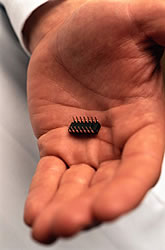
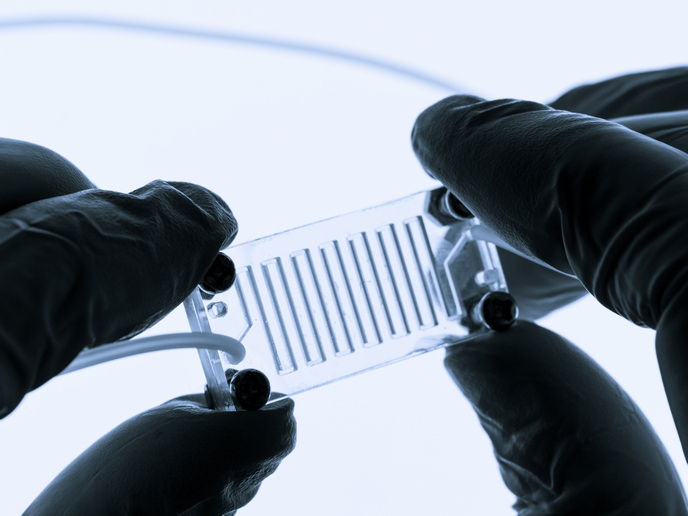
The brain is considered to be the only unexplored object on earth. The secrets of the brain and nervous system function lie in the numerous neuronal cells, their interconnections and resulting networks. The observation of the behaviour of such single units or a small ensemble of units, often as a response to an evoked stimulation of behavioural event, necessitates sophisticated instrumentation. VSAMUEL'S objective was to develop such instrumentation, based on silicon microelectrode arrays, capable of multi channel recordings from nervous tissue in vivo. Micro system technology (MST) refers to miniaturised systems fabricated using micromechanical technology. In the neurobiological field, the simultaneous observation of multiple sites, with minimum tissue damage, is of primary importance. MST, therefore is well suited for the batch fabrication of neural probes with multiple electrodes, for both recording and stimulation. In the context of VSAMUEL, a new micromachining process for batch fabrication of silicon neural probes has been developed. This process is based on alternative techniques (all-dry silicon-etch based process) that in comparison to the most commonly used ones (wet silicon etching) demonstrates several attractive features in terms of related design limitations, complexity, uniformity and manufacturability. The new process is suitable for the design and manufacture of fork-like probe shapes with 32 - and 64 -site recording electrode arrays. In addition, a novel measurement procedure has been set-up for the testing of microelectrodes. The probe chips are mounted on flexible printed circuits (FPC), designed specifically in the project. FPC is a specialist circuit board technology, in which tracks are printed onto flexible materials. This was found to be a solution for the interconnection between the probes and the comparatively large pre-amplifier systems. The front end of the FPCs were developed to fit the base plates and the bond pad positions of the silicon probe chips while the back end is tailored to mate with the preamplifiers. The FPCs interconnects are manufactured for both 32-channel and 64-channel versions. The VSAMUEL project also provided a solution to the fundamental problem of the diversity of desired spatial electrode distributions according to different neuroscience experiments. Fixed, standard designs, based on specifications from specific scientific groups, are often inadequate for individual researches. A new method has been developed, based on direct write laser lithography (DWL), that enables the on-demand activation of certain electrodes, out of a standardised array. The resulting processes and products of the project have been tested and evaluated providing promising outcomes. Basic neuroscience research and pharmaceutical research and drug development can make the most of the offered tools for the advancement of the their recordings and experiments.