


Using research to protect Europe's cultural heritage
9 October 2001 - 9 October 2001
Three EU funded research projects will be presented in Venice, Italy on 9 October, demonstrating how high level research and technological development can play an important role in protecting Europe's cultural heritage from pollution, ageing, natural disasters and negligence.
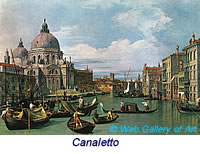
The presentations will cover a range of areas, including the protection of Assisi's Basilica against future earthquakes, using toxic methods to protect books and antiquities from insects and the relevance of Canaletto's paintings for understanding greenhouse effects and sea level fluctuations in Venice since the 18th century.
By combining their research efforts, Member States are making a coordinated effort to protect Europe's cultural heritage against environmental deterioration. Technology transfer in areas such as aerospace, pharmacy and medicine will be exploited by specialised small and medium sized enterprises (SMEs) from the EU and it is hoped that synergies with industry will be a catalyst for further innovation.
The ISTECH project, involving the European Commission's Joint Research Centre (JRC), an Italian SME and research institutions from Italy, Greece and Portugal, is working with an alloy of nickel and titanium to develop a new type of reinforcement for monuments located in seismic areas.
SAVE ART is developing an environmentally friendly and low cost method to preserve old books, textiles and antiquities. Instead of the toxic chemical compounds that are normally used to protect these items from insects, these new tools will kill pests by reducing oxygen levels. Research institutes in Spain, Italy and the UK are working together with a Swedish museum and two Italian SMEs in this project.For further information on the above projects, please contact:
Johanna Leissner
Scientific Officer
Research DG
Tel: +32 2 295 4957
E-mail: Johanna.leissner@ec.europa.eu
For further information on the event, please contact:
Julia Acevedo
Research DG
Tel: +32 2 295 2043
E-mail: Julia.acevedo-bueno@ec.europa.eu
The presentations will cover a range of areas, including the protection of Assisi's Basilica against future earthquakes, using toxic methods to protect books and antiquities from insects and the relevance of Canaletto's paintings for understanding greenhouse effects and sea level fluctuations in Venice since the 18th century.
By combining their research efforts, Member States are making a coordinated effort to protect Europe's cultural heritage against environmental deterioration. Technology transfer in areas such as aerospace, pharmacy and medicine will be exploited by specialised small and medium sized enterprises (SMEs) from the EU and it is hoped that synergies with industry will be a catalyst for further innovation.
The ISTECH project, involving the European Commission's Joint Research Centre (JRC), an Italian SME and research institutions from Italy, Greece and Portugal, is working with an alloy of nickel and titanium to develop a new type of reinforcement for monuments located in seismic areas.
SAVE ART is developing an environmentally friendly and low cost method to preserve old books, textiles and antiquities. Instead of the toxic chemical compounds that are normally used to protect these items from insects, these new tools will kill pests by reducing oxygen levels. Research institutes in Spain, Italy and the UK are working together with a Swedish museum and two Italian SMEs in this project.For further information on the above projects, please contact:
Johanna Leissner
Scientific Officer
Research DG
Tel: +32 2 295 4957
E-mail: Johanna.leissner@ec.europa.eu
For further information on the event, please contact:
Julia Acevedo
Research DG
Tel: +32 2 295 2043
E-mail: Julia.acevedo-bueno@ec.europa.eu