Bioenergy impact on urban life

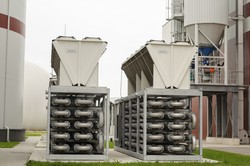
Picture a city that behaves just like a living organism – taking in resources and letting out waste. This concept, known as urban metabolism, is a powerful model for describing and analysing the flow of materials and energy within cities and allows us to think about them in a new way. Urban waste management, renewable bioenergy and environmental management are all linked with sustainable cities. Therefore, the BETA-EBM(opens in new window) (Biomass energy technology assessment - Environmental burden minimisation) project offered a fresh look at the impact of bioenergy technology on the environment. The initiative focused on assessing the environmental pollution produced by AD. Using enzymes, bacteria or other microorganisms, this technique breaks down biomass into liquid fuels, chemicals, heat and electricity. Researchers developed a portable sampling kit to obtain the baseline emissions profiles of ammonia, sulfur dioxide, nitrous oxide and methane stemming from digestate. Digestate is the solid material remaining after the AD of a biodegradable feedstock besides biogas. Scientists also evaluated different digestate management strategies, which largely depend on the AD feedstock used, the effluent recirculation and the season. They successfully developed an AD system coupling the features of two community-scale digesters processing organic fractions of municipal solid waste: a two-stage wet digester and a single-stage dry digester. By increasing effluent recirculation from 25 to 50 %, researchers observed reduced effluent discharge and increased biogas yield with a minimal increase in ammonia emissions. However, a sharp decrease in biomass yield and an increase in ammonia emissions were observed after increasing the recirculation level to 75 %. BETA-EBM outcomes offer a win-win situation both for bioenergy production and for reducing environmental impacts by addressing the need to use municipal and industrial biowaste for energy self-sufficiency. Project findings, published in two peer-reviewed journals, have important implications for both climate change and urban pollution.