Cementing better concretes with polymers

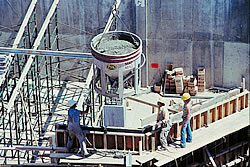
Construction methods and materials are becoming increasingly diversified and specialised. For example, the need for insular materials at railway crossings where erratic magnetic currents were known to damage metallic rebars. In addition, the requirement for lighter weight materials needed for the expansion of existing constructions, demanded innovative materials development. A Portuguese institute has developed a new polymer concrete using thermoset resins such as polyester resin and natural aggregates such as silica sand. Under the BRITE EURAM 3 programme, the company's primary aim was to develop reliable and cost effective, high value added pre-cast concrete elements using traditional materials and polymers. Many resins were evaluated but the developers settled on using a hybrid orthophtalic polyester resin mixed with special additives to prevent shrinkage. Initial tests showed that the compressive strength increased up to 167MPa after post curing. Additionally the tests also indicated that it was possible to reduce the resin compound to around 8.5-9.5% when using the hybrid resin. In a related development, the institute also designed Fibre Reinforced Polyester (FRP) reinforcements. These reinforcements have been made possible due to the advances in bonding technology, the low alkali environment and the inherent bond strength of polymer concretes. Specifically, the reinforcements are designed to suit the polymer concrete industry and are typically one-third the cost of non-ferrous reinforcements. The advantage they offer is that they enable thinner sections and lighter weight units to be produced. Their lighter weight allows for a 15% weight reduction that bears directly on a reduction in related transportation and installation costs. The new and advanced materials can be applied globally, in any sort of environment or climatic conditions. In doing so, the construction industry gains a sound competitive footing better able to compete with American and Japanese markets.