Getting the European rail industry back on track

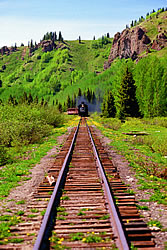
Railways have traditionally been a vital component of the transport infrastructure in Europe. However, rail traffic, both passenger and freight, has seen a significant decline over the past several decades, losing customers primarily to road but also to air transport. Work is underway to increase the competitiveness of the rail industry in an effort to reverse this trend. Noise and vibration are major issues marring rail transport with implications for the environment, passenger comfort, fuel efficiency and local communities. The Growth Programme under the Fifth Framework Programme funded research to improve knowledge concerning the reduction of noise and vibration. Noise and vibration originate from a variety of sources, generated by contact between the wheels and the tracks, component irregularities, aerodynamic noise and interactions with the ground underneath the tracks as well as with tunnels and bridges. The Growth project, CASCO, coordinated by Vienna Consulting Engineers (VCE), sought new ways to dissipate the energy deriving from noise and vibration within the system. A semi-active approach was taken to damping or dissipating this energy with the development of different kinds of actuator and isolator prototypes. These were based on the latest in materials technology, namely magneto-rheological (MR) materials. MR materials are fluids that can solidify in the presence of a magnetic or electric field, and return to the liquid phase when the force is removed. Led by VCE, knowledge was acquired and shared on MR materials and their use in semi-active damping applications. Advances were also made with respect to more efficient placement of the actuators in the rail system. These results can be exploited for the benefit of the rail industry, but not only. The knowledge gained is also relevant to building safety, particularly from seismic activity, other transport sectors as well as military and space applications.