One step closer to future solar cells

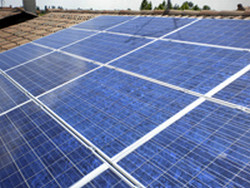
The world is entering the third generation of such device concepts. New mechanisms of photoconversion and novel materials to increase efficiency while decreasing cost are required. The EU-funded project 'Emerging materials and methods for 3rd generation solar cells' (EMM3) investigated both. One part of the project focused on understanding the mechanisms that limit current photoconversion and elucidating the transport phenomena of such materials. The second part focused on developing materials that exhibit the properties required for third generation PV concepts and enhancing performance while reducing cost. Scientists discovered one of the major conditions affecting optical properties of a promising semiconductor. They also created new nanowires with novel crystalline structures, demonstrating a simple alternative to a more complex conventional method. Finally, intermediate-band solar cells (IBSCs) with more than one bandgap offer the possibility to increase the efficiency beyond that of a single-bandgap cell. They increased overall lifetime of ion IBSC and enhanced efficiency by several orders of magnitude using core-shell nanowires. EMM3 made significant advances in the field of third generation solar cells. Scientists are one step closer to realisation of new technologies offering increased efficiency and/or decreased cost. These improvements will encourage the widespread uptake of PV technology with important benefits for industry, consumers and the planet.