


European degree could stimulate mobility, says Östros
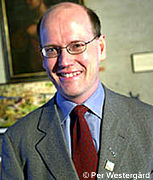
Introducing a European Masters degree could stimulate the mobility of students and graduates, said Swedish Minister for Education and Science Thomas Östros, speaking in his capacity as chair of the research and education councils at a student convention on Gothenburg, Sweden. Mr Östros said that the introduction of the degree should be optional and carried out at the Member State level, but he stressed that the degree would be an important step towards the fulfilment of several objectives of the Bologna declaration of 19 June 1999, where 29 countries pledged to reform the structure of their higher education systems in a convergent way. 'The European Master's degree should be a supplement to already existing national degrees and not a replacement,' said Minister Östros. He added that students should be given the choice of studying towards a European Masters degree or an ordinary degree, or perhaps both. 'One important purpose of this new degree is to motivate mobility, which could be facilitated by separating Master studies from undergraduate studies. In my view, students are very internationally oriented and interested in getting high-quality education with an attractive degree. I think a European Masters degree could become quite popular,' he concluded.s.
Countries
Sweden