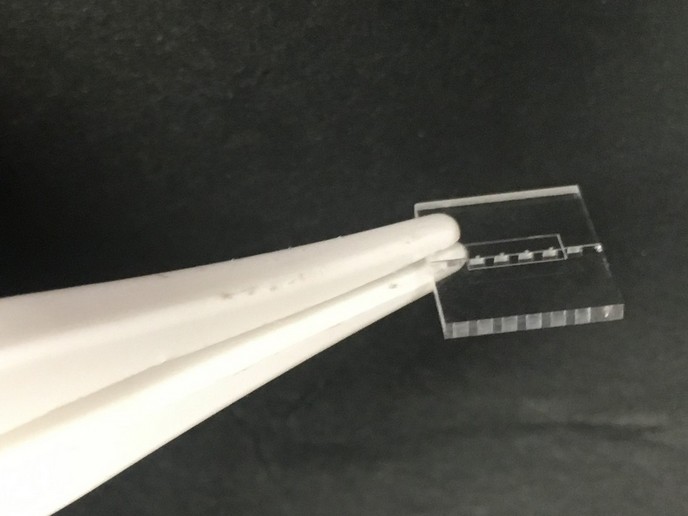
Advanced chemical sensor developed

Understanding how burning chemicals transform over time is very valuable information when designing any thermal industrial process. Current sensing technology is not sensitive enough to measure multiple chemical signatures at once, and cannot achieve fine resolution over a period of time. The EU-funded ASHTCSCS (Absorption spectroscopy and hyperspectral tomography based on coherent supercontinuum source) research group used supercontinuum laser technology to design a device that can measure many signatures as well as temperature, thousands of times per second. A supercontinuum laser is an extremely intense laser beam that is achieved by broadening the spectrum of a normal beam. Researchers envisioned a device with two modes: one for when resolution over time is important and one for when detection of irregularities is important. ASHTCSCS developed methods and algorithms for the second method, known as tomographic spectroscopy. Along with these practical findings, researchers developed a new theory of tomographic spectroscopy to explain the results of the experimental work. Scientists in Germany built a prototype device that uses both modes of action, and tested it successfully in the laboratory. This device recorded the highest-ever levels of resolution for chemical spectroscopy. These results are already being used by a company building gas sensors and industrial control systems. Other commercial and industrial applications of this technology are currently in the pipeline.