


Biotech progress in Europe needed urgently - conference
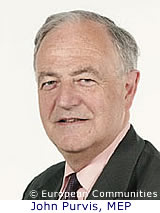
Concrete steps need to be taken if Europe's biotechnology and life sciences research and businesses are not to lag further behind the USA and other countries. This was one of the main points of view expressed at a public consultation on the subject held in Brussels on 27 and 28 September. Opening the conference, European Commission president, Romano Prodi, highlighted the importance of clarifying Europe's stance on the issues involved. 'Biotechnologies and life sciences will be major factors in driving technological and economical progress in the 21st century, which is why Europe needs a sound strategy to harness this new potential and to tackle the challenges associated with ethical preoccupations. It would however be a mistake and contrary to my views on good political governance to develop such a strategy above the heads of the citizen.' The results of the conference will help the Commission to complete its policy paper on biotechnology and life sciences, which it has pledged to bring out by the end of this year. It is also an extension of the public consultation the Commission launched on 4 September with a consultation document. The stakeholder conference, organised by the European Commission, comprised several workshops with panels including European Commissioners for research, enterprise and information society, environment and consumer protection and food safety in attendance, as well as representatives from industry, the European Parliament, national governments, academia and non-governmental organisations. Speaking on the effects of an unclear European policy towards biotechnology and life sciences, UK MEP John Purvis, pointed out that EU lags behind the USA in the sector in amount of research and development and employment by a ratio of about three or four. 'The EU risks becoming a customer of others, or its biotech industry not existing at all,' he said, pointing out that there had already been signs of migration out of the EU of some firms specialising in seeds and plants due to the continent's attitude to GMOs (genetically modified organisms). Some leading research centres, such as the Roslin institute in Scotland, have seen the percentage of their budgets allocated to agricultural research plummet since the beginning of the 1990s in part due to European attitudes to the area, further weakening Europe's position. Mr Purvis also expressed concern that one of the European disadvantages to making progress in the sector is the persistence of barriers between the public and the private sector and between industry and academia. But one area where he would like to see more dramatic coordination is who deals with the subject. There are, he says, too many Commission DGs, national government departments and ministries involved in decisions, suggesting instead that there be one central organisation given responsibility for biotechnology and life sciences. As well as the lack of coordination and negative public attitude, some participants also pointed to unfavourable business environment for biotech companies in Europe. Mr Purvis highlighted the lack of a community patent as a major brake on biotech innovation. Dr Pedro de Noronha Pissara, a biotech entrepreneur and chair of the Portuguese national biotechnology association, produced figures from a survey of biotech SMEs (small and medium sized enterprises) which indicated that the lack of sufficiently skilled and qualified staff and management was a major problem in Europe. Other factors included lack of financing and tax incentives, cumbersome administration, insufficient flexibility and patenting costs. 'Not one respondent named technology, because we have the technology in Europe,' said Dr de Noronha Pissara. Finally, Mr Purvis pointed out that a lot of the work being done now was trying to put right the problems caused by the way biotechnology had been presented to the public. 'GM products, for example, were introduced without the public being aware of what they were.' An offensive on public opinion of biotechnology was also endorsed by Michael Browne of GlaxoSmithKline. 'The Commission needs to look at public perception of science and to motivate people. It needs to emphasise the benefits of science to society,' he said.