


Commission project to develop role of 'CyberCar'
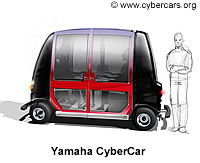
A European Commission project is to examine ways of transforming city transport using the 'CyberCar' concept. The project hopes to provide an alternative to polluted, clogged city roads by developing the CyberCar concept of individual automated vehicles as an alternative to private cars and a complement to public transport. The objective of the CyberCar project is to bring together European research organisations and other bodies to test and exchange best practice, and share experimental and development work. A major part of the work carried out by the project will be the development and testing of technologies which could enhance existing CyberCar systems. These include better navigation, collision avoidance and energy management technologies and the development of more user-friendly interfaces. The European Commission contract for the project was awarded in August 2001. The Cybercars consortium includes France's Institute National de Recherche en Informatique (INRIA), where the experiments will be based, and has a total budget of around 10 million euro. The European Commission's Information Society Technologies (IST) programme of the Fifth Framework programme (FP5) will finance research and development for the vehicles and the infrastructure, while the Energy, Environment and Sustainable Development (EESD) programme of FP5 will finance the urban studies and the experiments. Some 12 European cities have officially declared their interest in participating in the project studies and experiments.