


Byrne calls for more realistic approach to GMO risk
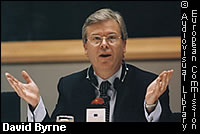
Health and Consumer Protection Commissioner David Byrne has said that a more realistic approach to risk is needed in order to stem European 'GMO psychosis.' Speaking at a European Voice conference on 'Risk versus benefit' in Brussels on 22 November, Commissioner Byrne said that 'with GMOs [genetically modified organisms] we have a very clear example of something that poses little if any risk but which has proved unacceptable.' He said the fear of GMOs is out of all proportion to more tangible threats such as road accidents, which kill 40,000 EU citizens every year, and smoking, which claims 500,000 lives in Europe each year. Mr Byrne explained that 'to my knowledge, nobody has died from eating a GMO. Animals and humans have been eating GMO feed and food for years in the US without any obvious problems.' He contrasted this with the situation in Europe, where he said 'GMO psychosis' has led to an 'untenable' de facto moratorium on new authorisations of GM produce since 1998. He said that the moratorium 'has serious implications for European industry, agriculture and research,' and that he intends to restart the approvals process as soon as possible. He added that Directive 2001/18/EC on the deliberate release of GMOs into the environment and new proposals for the traceability and labelling of GM food and feed products have been generally well received by Members of the European Parliament and the EU Council of Ministers, who now need to discuss and adopt them. 'There are irrational fears of GM food in the EU and equally irrational fears in the US about how we in Europe are approaching the issue,' Mr Byrne explained. He said that while the de facto moratorium on new GM approvals has had an effect on American exports to Europe, this is 'nothing near to the inflated and incorrect numbers of mega trade losses that have been ventilated in the US press.' Mr Byrne said that the problem lies in the polarised nature of the debate, where 'on both sides of the argument, key players have resorted to scare-mongering tactics, gross exaggerations and unsubstantiated claims.' He added: 'I feel passionately that we need to get away from the emotional, the irrational and the bullying tactics if substantial progress is to be made', and called on industry and politicians to lead the way in improving communication about risk with the public. The Commissioner also challenged Member State politicians to 'show leadership and courage' over risk-benefit issues, asking why they reject 'sound, independent and scientific advice' with GMOs while relying on it in other areas. 'Are they only looking at the risk the ballot box presents?' he asked. The issue is crucial to all European policy makers, Commissioner Byrne emphasised, as 'while there is no such thing as zero risk...we cannot have a free for all especially in areas touching on public health.'