


Reding hails Leonardo da Vinci programme as 'laboratory of innovation'
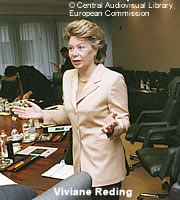
EU Commissioner for Education and Culture, Viviane Reding, has called the Leonardo da Vinci programme a 'laboratory of innovation in the field of lifelong learning.' Commissioner Reding was speaking ahead of the conference 'Valorisation of the Leonardo da Vinci programme, pillar of lifelong learning', taking place in Madrid, Spain on 29 and 30 April. The Commissioner spoke of Europe's twofold challenge of better preparing citizens for entry into the labour market and providing companies with a skilled workforce in order to 'cope with rapid scientific and technological changes in an increasingly competitive world.' 'To meet this challenge, the European Commission's Leonardo da Vinci programme serves as a laboratory of innovation in the field of lifelong learning,' said Ms Reding. The conference will provide a forum for a debate based on the results of the programme, particularly on the experiences of programme participants and lessons which can be drawn from these. Representatives from political, economic and social spheres of vocational training and mobility in Europe will debate the ways in which to raise the visibility of the achievements of the programme at European, national and regional levels. The programme is now in its second phase, covering the period of 2000 to 2006. It promotes transnational projects based on cooperation between the various players in vocational training, including universities, businesses, chambers of commerce and training bodies. During the first phase of the programme, which ran from 1995 to 1999, around 125,999 people received a grant for a work-related placement abroad. Funding has increased in the second phase, and in the year 2001, around 38,000 people benefited from a Leonardo da Vinci grant. The budget for the second phase is 1.4 billion euro, and the programme is open to 31 countries.