


Germany kicks off its Year of Technology with a list of key technologies for the future
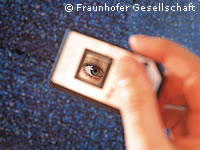
Germany's Fraunhofer Gesellschaft, along with the science journal 'Bild der Wissenschaft', has outlined 12 technologies which it believes to be key to maintaining and enhancing the country's competitiveness. The technologies include ambient intelligence, medical imaging and computer based simulation for designing new materials. The shortlist kicks off Germany's Year of Technology 2004, and has been drawn up under the motto 'driving forward an innovation offensive'. The Fraunhofer Gesellschaft believes that cost savings alone will not make German companies more competitive, and that competition from low wage companies must instead be met with innovation. 'If in Germany, we desire to maintain a significantly higher standard of living than countries such as Brazil or Malaysia, then we must also produce or supply something these countries cannot match - higher quality products for which consumers are willing to pay a higher price,' said President of the Fraunhofer Gesellschaft, Hans-Jörg Bullinger. The miniaturisation of electronics is one of the areas highlighted. Combined with wireless communication technology, this constitutes a breakthrough towards 'smart environments'. Miniature electronic components packed with microchips, sensors and communication modules are transforming objects used on a daily basis into subjects capable of communication. The further development of medical imaging is also shortlisted as a priority. Information and communication technologies (ICT) enable pre-operative planning, and can guide a physician operating on a particularly sensitive area of the body, such as the brain. Another of the technologies selected, 'intuitive man-machine cooperation', aims to do away with the need for the instructions which accompany every new appliance. New interfaces will enable machines to react to voice commands, facial expressions or gestures.
Countries
Germany