


Globalisation presents opportunities for SMEs, but not in equal portions, hears OECD ministerial conference
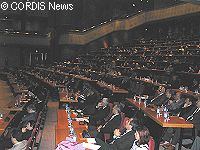
Ministers gathered at the Organisation for Economic Cooperation and Development (OECD) Istanbul ministerial conference on small and medium sized enterprises (SMEs) on 4 and 5 June were aware that the situation of SMEs has changed in recent years, and that new approaches are therefore needed. What has changed? Globalisation - made possible by the development of information and communications technologies (ICT) - has enabled even the smallest business to cooperate with entities on the other side of the world in real time. Suddenly, SMEs have access to global markets, and governments worldwide are eager to ensure that their SMES, often a hub of innovation, are not only able to access these markets on equal terms with others, but to create the conditions in which they can compete successfully. Governments have good reason to make this a priority - SMEs constitute between 96 and 99 per cent of companies in most OECD member countries, according to Donald Johnston, Secretary-General of the OECD. Mr Johnston called for 'greater scope for SMEs to access global markets,' saying that 'SMEs will be a major driver of growth in the 21st century.' 'Governments can no longer afford to look at SME policies in the traditional way,' echoed Herwig Schlögl, Deputy Secretary-General of the OECD. Many developing countries are concerned that their innovative SMEs do not have the same opportunities as those in developed countries. Turkey's Prime Minister, Recep Tayyip Erdogan, gave his support to globalisation, however, saying that all countries should benefit from its opportunities and uncertainties.' Peter Fritz, co-chair of the business symposium that preceded the ministerial conference, also rejected calls to slow down globalisation: 'The business opportunity is to do things on a much wider canvas,' he said. 'Technology gives us an opportunity if we use it properly. And let's not forget that every big fish was a small fish at some point and that every big fish will be a small fish again one day.' Whatever their views on globalisation, all 64 countries represented at the conference committed themselves to 'assessing the effects of globalisation on SMEs' and to 'examine issues related to SME access to financing and support for innovation'.