


EIB releases figures on research loans and promises move towards higher risk lending
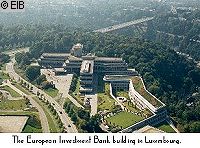
Lending for research, development and innovation from the European Investment Bank (EIB) totalled some seven billion euro in 2004, the bank's president has announced. Support for economic and social cohesion remained the EIB's leading objective, and Europe's 'assisted areas' were supported with around 28 billion euro in 2004 - 70 per cent of the bank's total lending. According to the EIB's report, protection and improvement of the natural and urban environment accounted for one third of total lending within the EU-25. This figure includes a set of new initiatives, many of which are in the field of renewable energy. Total lending increased by 2.1 per cent to 43.2 billion euro, 92 per cent of which was allocated within the EU. In order to finance its lending, the Bank raised 50 billion euro on the international capital markets, compared to 42 billion in 2003. The profit and loss statements closed with a net profit of 1.38 billion euro, down three per cent from 2003. The EIB's watchwords are 'innovation' and 'quality', according to its president, Philippe Maystadt. Innovation is to be sought through new forms of collaboration with the banking sector, new financial instruments, and new ways of serving small and medium sized enterprises (SMEs). Quality refers to further increasing the bank's value added in three areas: specific contributions of a project to EU policy objectives; quality and soundness of projects; financial advantage for the user of EIB funds. In a statement that is likely to be of particular interest to the research community, the EIB says: 'Innovation and greater value added will lead to a gradual increase in risk. The Bank will take on risks not easily absorbed by the market, within strict limits and with appropriate controls. [...] By taking on greater risk if and when justified, the EIB will aim to be a pathfinder in the financing of projects implementing EU policies.'