


Science briefing gives support to networks in the social sciences
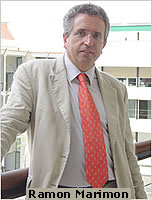
While networks of researchers have long been championed at European level, for reasons including knowledge dissemination and the avoidance of duplication, most work has focused on the natural sciences. But can such networks be equally constructive in other areas of science, in particular the social sciences and humanities? This was the subject of discussion at a Swiss Science Briefing in Brussels on 17 June, where both Swiss political scientist Professor Hanspeter Kriesi, and economist and Spain's former Secretary of State for Science and Technology, Professor Ramon Marimon, spoke in favour of networks in the social sciences. Speaking on the same day that Europe's Heads of State and Government were locked in difficult discussions on the future direction of the European Union, Professor Marimon commented that while it is important to have a focus on industry within Europe's research programmes, 'if I look at the problems the 'EU is having, these look like social science problems to me. So it's strange that we don't want to put some money into it.' Switzerland has perhaps more social science and humanities networks than any other country. In 1999 the country created a number of national centres of competence in research (NCCRs). Some 20 are now in operation, six of which are working in the social sciences and humanities fields. As Professor Kriesi explained, the natural sciences were the first to benefit from the scheme. When the first call for proposals was published, the social sciences had to compete with the natural sciences, and none received funding. 'Social sciences were deemed not to be capable of constructing durable networks,' he said. This led to objections from the social science community, and a dedicated call for this area was later published. Professor Kriesi is the coordinator of an NCCR with the name 'Challenges to democracy in the 21st century', and is a firm advocate of networks bringing together researchers from the social sciences and humanities. Networks favour exchange and cooperation within and across disciplines, universities and regions, according to Professor Kriesi, which, he believes, makes them particularly appropriate for social science, which is traditionally very individualistic. Networks also avoid the 'sprinkler effect' of giving too little to too many, and lead to a clarification of goals and the means to achieve them. Particularly important for social science, bringing different actors together can set in motion the creation of data infrastructures. And networks also increase both the visibility and the prestige of its participants. 'We get our funds from the public and the public wants to know what we do. Journalists write about you if you have an NCCR and, of course, you get the attention of sponsors.' Professor Kriesi also spoke of some of the arguments against creating networks, including the belief that excellence is produced by individuals, that they allow 'free loaders' to lead an easy life, and that they drive out other research. Some also argue that networks are often artificial in nature - created in order to receive funding but acting as before once the funding has been received. And then there is the argument that partners are included for strategic reasons, in order to ensure the representation of all regions or language groups for example, and not for their areas of expertise. Professor Kriesi stressed that he is not in favour of creating networks in all circumstances. The partners must have a long term perspective, and the grouping should include open, entrepreneurial researchers with international experiences, he said. Professor Marimon, well-known for the mid-term evaluation of the Sixth Framework Programme (FP6) that he and a panel of experts produced in 2004, spoke of certain drawbacks that can arise from networks, and which must be minimised. Excessive management and bureaucratic costs, institutional hold-ups, weak internal structures, weak intellectual commitment and superficial interdisciplinarity fall into this category for Professor Marimon. Referring to low success rates for funding applications, Professor Marimon said that the costs are always higher when it is a once-and-for-all effort. Those who do not receive funding should receive detailed feedback telling them why. 'If people trust the mechanism they will improve next time,' he said.
Countries
Switzerland