


Cell death triggered by stress
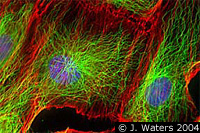
A team of molecular biologists at the German Cancer Research Centre (Deutsches Krebsforschungszentrum, DKFZ) has found evidence that when cells are subjected to too much strain, the their control centre gives an order to commit suicide. The results of this basic research are expected to lead to new approaches in the prevention, diagnosis and treatment of cancer. Minute bodies in the nucleus, the nucleoli, have the function of stress sensors and give the starting signal for the cellular suicide program (apoptosis) when there is too much strain. The investigators describe in the latest issue of the specialist journal Molecular Cell how stress leads to activation of apoptosis protein p53 by triggering a signalling cascade that ultimately leads to the cell's death. Health and growth of a cell depend to a large extent, on well-functioning ribosomes, the protein factories of cells. An essential component of ribosomes, namely ribosomal ribonucleic acid (rRNA), is only formed when a particular transcription factor, called TIF-IA, in the nucleoli, stimulates the RNA polymerase I to couple on to the genes for ribosomal RNA and produce copies of these. But whenever TIF-IA is absent or inactivated, serious changes in the nucleoli happen and ultimately the cells stops dividing and the suicide programme starts. The team, directed by Professor Dr Ingrid Grummt, head of the Division of Molecular Biology of the Cell II, and her co-worker, Dr. Xuejun Yuan, was able to generate genetically modified mice who are unable to produce TIF-IA ('knockout mice'). They found that these animals are not viable; the embryos died after only nine and a half days. The unborn animals were considerably smaller and less developed compared to their normal peers. When the team cultured embryonic murine cells in which TIF-IA was eliminated or blocked, they showed the following picture: the nucleoli were disrupted, cell division came to a halt. The level of active p53 was significantly elevated and the cells showed all signs of programmed cell death. Furthermore, the scientists found that disintegration of ribosomes is accompanied by the release of ribosomal proteins. Several of these, including protein L11, have the ability to bind to the MDM2 protein. When this happens, p53 is simultaneously released from its 'embrace' by MDM2 and it can mediate the apoptosis signal. The striking correlation between perturbation of nucleolar function, elevated levels of p53, and induction of cell suicide supports the view that the nucleolus is a stress sensor that regulates p53 activity. This fundamental research shows that the function of the nucleoli is not restricted to the production of ribosomes but also plays an important role in the control of cell preservation and cell growth. These findings might therefore also contribute to a better understanding of cancer, since overproduction of rRNA appears to be a first step in tumour development.
Countries
Germany