


'Biochip' could replace animals in drug trials
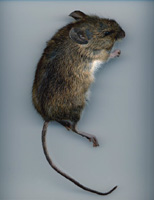
US scientists have developed a miniature device that could imitate the behaviour of human internal organs, including the liver, kidney and stomach, and thus replace animals in drug testing. The mechanism was developed by scientists at US company Hurel. It comprises a 'biochip' that hosts separate but microfluidically interconnected compartments. The different compartments contain cultures of living cells drawn from, or representing, different organs or tissues of a living mammal. 'Microfluidic channels between the compartments permit compounds and "blood surrogate" fluid to recirculate as in a living system. The physical geometry of the system is designed to simulate certain physiological parameters-drug residence time, circulatory transit time, fluid-to-tissue volume ratios, or others-so as to mimic relevant aspects of the physiology of the living animal,' explains Hurel. The development has enormous potential for replacing the animals currently used in experiments, and could also be more accurate than animal models at showing how human organs would react. 'At present there are no simple, rapid preclinical tools to mimic the in vivo interplay of enzymes and transporters. What is needed is a simple flow-through assembly that must be amenable to incorporating hepatocytes and enterocytes from animal species, but also, alternatively, from humans [...],' says Chair of Hurel's Scientific Advisory Board. 'Such a novel preclinical tool would [...] expose the reasons for the discordance often found between the ADME [Absorption, Distribution, Metabolism and Elimination] characteristics of drug molecules across animal species versus humans.' Hurel has just signed a joint scientific collaboration event with Johnson and Johnson Pharmaceutical Research and Development (J&JPRD). Under the agreement, J&JPRD will provide both scientific guidance and funding as Hurel carries out a one-year research and development programme aimed at validating its assay platform technology, and readying the product for general, commercial release.
Countries
United States