


WSIS reaches compromise Internet governance
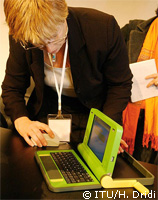
The second World Summit on the Information Society (WSIS) closed on November 18 in Tunis, Tunisia, with delegates managing to reach an agreement on the two key issues on the agenda: internet governance and tackling the digital divide. The EU played a key role in brokering a last-minute deal on the progressive internationalisation of Internet governance. The compromise text agreed was based largely on EU proposals presented in June. As a first important element of the agreement, a new international Internet Governance Forum (IGF) will be created to represent governments, the private sector and civil society at large in policy discussions related to Internet governance. There was also a consensus in Tunis that countries should not be involved in decisions regarding another country's top level domain (TLD), a proposal that was strongly supported by the EU during the negotiations. Viviane Reding, EU Commissioner for Information Society and Media and leader of the European Commission delegation in Tunis, said: 'I welcome the texts now agreed in Tunis. They pave the way for a progressive internationalisation of Internet governance. 'This agreement was possible because of the strong belief of all democratic nations that enhanced international cooperation is the best way to make progress towards guaranteeing the freedom of the Internet around the globe and also to enhance transparency and accountability in decisions affecting the architecture of the Web,' she continued. 'The fact that the EU spoke with one voice in Tunis, and had stood by its case for more cooperation on Internet governance in the run-up to the summit, certainly strongly influenced this positive agreement.' Once agreement had been reached on the issue of Internet governance, the focus of the summit moved to bridging the digital divide. UN Secretary General, Kofi Annan, called for a drastic reduction on the costs connectivity, computers and mobile telephones, and in answer MIT Media Lab presented its for a 100 USD (85.62 euro) laptop, which it said would revolution education worldwide. MIT Media Lab's Nicholas Negroponte presented the Linux-based, full-colour, full-screen laptop which uses innovative power sources, including wind-up. The laptop will be able to do everything except store large amounts of data, and the prototype will enter production as soon as orders reach 5 million. At the meeting, India, Brazil and Russia signalled their interest in purchasing the minimum order of 1 million computers. Mr. Negroponte says he hopes to see 100 million manufactured by 2007, with the ultimate goal of providing every child with a portable computer by 2010. To achieve this a new non-profit association, One Laptop per Child (OLPC), has been created. The laptops are not designed as a primarily commercial venture and they will only be distributed to schools directly through large government initiatives. The initiative is a partner in the International Telecommunication Union's 'Connect The World' programme.