


Republic of Korea joins Galileo as satellite transmits first signals
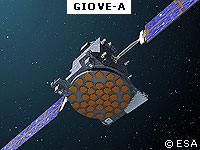
Following six months of discussions, an agreement enabling the participation of the Republic of Korea in the Galileo project was signed in Brussels on 12 January. The agreement comes just over two weeks after the launch of the first Galileo satellite, GIOVE-A. 'After the successful launch of the [...] GIOVE-A satellite, this new agreement underlines, once again, the ever growing worldwide interest for the programme,' said EU Transport Commissioner Jacques Barrot. The agreement provides for cooperative activities in the areas of scientific research and training, industrial cooperation, trade and market development, standards, as well as certification and regulatory measures. South Korea's expertise in space technology and applications will make an important contribution to Galileo. The country also produces and uses many systems that can be made more competitive with satellite navigation. Indeed, South Korea is already an active user of satellite navigation services in various sectors, including transport, fleet management, science and geodesy. International interest in Galileo is expected to boost still further the satellite navigations market, which, with estimated revenues of 275 billion euro by 2020, is already considerable. Proof of GIOVE-A's good health were received on 12 January when the satellite transmitted its first signals from medium Earth orbit. Galileo is a joint initiative between the European Commission and the European Space Agency (ESA). It will prepare for the development of a new generation of services in areas such as transport, telecommunications, agriculture and fisheries. To date, such a service is only available through the US' GPS system and Russia's GLONASS system, both of which are financed and controlled by military authorities. Galileo will be administered solely by civilian authorities.
Countries
South Korea