


ICT task force launched
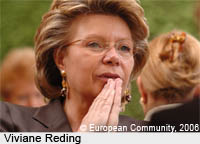
The European Commission has launched a task force to tackle barriers to competition and competitiveness. The launch marks the start of a five-month debate on the challenges faced by producers and users of ICT (information and communication technologies). 25 members of high-profile ICT businesses and other stakeholders make up the task force, and their debate will have a particular focus on the ever-increasing convergence of new technologies. EU citizens can now watch television on their mobile phones, listen to the radio on their television and do both on their computers. The way we consume media is just a symptom of the increasing capabilities of ICT in all areas. Similar changes are taking place at all levels of business and leisure life. This will have huge consequences for the range of companies in and around the ICT industry. The task force aims to identify ways in which the internal market can be completed, and any obstacles in the way of progress. Once the task force has completed its study, it will make policy recommendations directly to the European Commission by the end of the year. 'The ICT industry is crucial to Europe's economic recovery, and a strategic, market-oriented cooperation of the EU institutions with the private sector is the key to its successful development,' said Information Society and Media Commissioner Viviane Reding. 'With the ICT Task Force, we want to ensure that Europe's ICT industry keeps its leading role in the world. Jointly, we will focus our work on facilitating cross-border competition in Europe, on removing barriers for a true internal market for online content services, and on combining more effectively public and private research efforts to spur ICT investment,' she said. The ICT industry is one of the key sectors identified by the expert Aho group in its report on European innovation, published in February. While the ICT sector contributes to only 5.3 per cent of the EU's GDP and 3.6 per cent of its jobs, it accounts for a huge 20 per cent of labour productivity growth. ICT is currently Europe's single largest industry to invest in R&D, accounting for 25 per cent of total investment. ICT growth is large because of leaps in the effectiveness of ICT for business and for consumers. Consumers are especially important in the uptake of ICT, with new ways to consume and new forms of technology to enhance that consumption. The task force will look at six areas: - ICT uptake - why do certain regions adopt new technology earlier than others? How do standards in ICT education vary for Europe's workforce? How important are standards and ICT interoperability? What is the impact of ICT on business? - Intellectual Property Rights (IPR) - what is the relationship between IPR and both R&D and innovation? What is the impact of piracy? - Innovation in R&D, manufacturing and services - how can R&D be turned into innovative products and services and how can R&D be adapted to the Lisbon agenda goals? - SMEs and entrepreneurship - how can Europe maximise the development of innovative SMEs, looking at clusters, funding, policy, patents, industries and so on? - Skills and employability - How do we interest future generations in technology innovation; how will ICT transform the way these generations learn and work, and how does the ICT industry create an environment that attracts and retains the highly-skilled? - The Single Market - how does the EU achieve a truly single market to attract investment and to stimulate competition? Commission Vice-President Günter Verheugen, responsible for enterprise and industrial policy, said: 'This Task Force should provide us with new ideas and coherent recommendations to promote the competitiveness of Europe's ICT industry. This is an important element of our new industrial policy.' The task force is co-chaired by Heinz Zourek, the Director-General for DG Enterprise and Industry, and Fabio Colasanti, the Director-General for DG Information Society and Media. Their findings will feed into the i2010 initiative - 'a European Information Society for Growth and Employment'.