


Microwave energy to speed up computer performance, claims new research
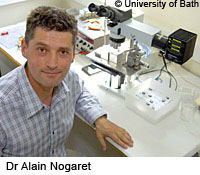
Electrical wiring found in computer chips could be relegated to museum exhibitions, according to new research which aims to develop a system using microwave energy (radio links) to carry electric currents. If successful, partners in the project believe that the new system could make computers 500 times more powerful. Conventional electronic devices rely on the transport of electrical charge carriers - electrons - in a semiconductor such as silicon. The research project, which involves four universities in the UK and a university and research centre in Belgium and France, aims to create a device no longer than 100 nanometers, in which energy is generated by electrons swinging back and forth in a magnetic field. This process is known as 'inverse electron spin resonance', and is similar to the larger scale process which generates signals in nuclear magnetic resonance (NMR) brain scans. Integrated into computer chips - an electronic device made out of a semiconductor material - this would allow signals to be transmitted between components without the use of electrical wiring. Since the 1970s, it is estimated that the speed and performance of our computers have doubled more or less every 24 months. At the same time, scientists have been working on reducing the size of computer chips using nanotechnology. But as chips shrink in size, electrical wiring will reach a physical limit and will soon be unable to handle the data rate needed. 'We can only go so far in getting more power from silicon chips by shrinking their components - conventional technology is already reaching the physical limits of the materials it uses, such as copper wiring, and its evolution will come to a halt,' says Professor Alain Nogaret from the University of Bath, the lead partner in the consortium. Wireless technology, which is a widespread in Internet systems and mobile telecommunications, would also be unsuitable as the electronics that create and use wireless signals are too large to be used within microchips successfully, says Professor Nogaret. According to the Professor, his research is a viable alternative. By firing electrons into magnetic fields produced in semi-conductors that are only a few atoms wide and are layered with magnets, the 'nano' device will be able to broadcast electric signals between its components without weakening the signal, which is the case with conventional computing devices using electrical wires. He predicts that, if this research is successful, it could make computers with wireless semi-conductors a possibility within five or ten years of the end of the project. 'Then computers could be made anything from 200 to 500 times quicker and still be the same size. 'This research may also improve the accuracy and speed of medical diagnostic by gathering data from health monitoring sensors. The microwave emitters are small enough to be integrated on portable biological sensors which feed information out on faulty biological processes,' says Professor Nogaret. The project received funding from the Engineering and Physical Sciences Research Council (EPSRC), the UK government's leading funding agency for research and training in engineering and the physical sciences.
Countries
Belgium, France, United Kingdom