


Research sheds light on insects' autopilot system
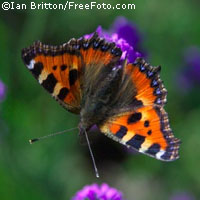
The way in which flying insects use visual cues to take off, maintain height and land has been worked out by a team of researchers with the help of a specially designed flying robot. The work, funded by the EU under the Fifth Framework Programme and the French National Centre for Scientific Research (CNRS), is published online by the journal Current Biology. Insects and other flying creatures are able to control their height above the ground despite lacking the sophisticated instrumentation available to human pilots. In this latest research, the scientists designed a micro-helicopter to test a theory that insects use a system known as 'optic flow' (OF) to gain information about their height above the ground. When insects fly forwards, the image of the ground below sweeps backwards across their visual field with a speed that is inversely linked to the height of the insect above the ground. In other words, at low heights, the ground appears to move faster than it does from greater heights. The researchers proposed that insects have an internal optic flow regulator which uses a feedback loop to assess the ratio of groundspeed to height, and equipped their micro-helicopter with just such a system. Under the system, if the ground below appears to be moving too slowly, the insect will descend until the ground is moving at the optimum speed according to its OF regulator, while if the ground is moving too fast, the insect will ascend. They found that the robot mimicked many patterns of insect flying behaviour which have been observed over the years. For example, when migrating butterflies need to cross a canyon, they do not simply fly across the top, but fly down the side, across the bottom and then up the other side. Similarly, if they have to fly over an obstacle such as a forest, their height above the trees is the same as their previous height above the ground. The OF model also explains why insects descend when flying into a headwind; the headwind causes the groundspeed of the insect to decrease, so it descends until the ground appears to be moving at the 'right' speed according to its OF regulator. Conversely, flying with a tailwind causes the ground to move by at a faster rate, so the insect ascends to compensate. However, the system is not without its faults. In the 1960s a study found that when bees fly over mirror smooth water, they have a tendency to fly lower and lower until they actually crash into the water head first. When the water is rippled, they are able to maintain an appropriate altitude without problems. In the current study, the authors explain that this is because completely still water does not provide the bee's eye with any contrasting components, and so the OF sensor no longer responds. This leads to a negative error signal in the system which causes the insect to descend until it hits the water. 'A similarly disastrous tendency was observed in the MH [micro-helicopter] when we introduced a lack of contrast on the ground,' the researchers note. Take off and landing can also be achieved using the OF regulator. At take off, tipping the nose of the helicopter forward caused an increase in groundspeed which triggered an ascent. At landing, tipping the nose of the helicopter backwards caused it to slow and consequently, to descend. 'Our control scheme explains how insects manage to fly safely without any of the instruments used onboard aircraft to measure the groundheight, groundspeed, and descent speed,' the researchers write. 'An optical flow regulator is quite simple in terms of its neural implementation and just as appropriate for insects as it would be for aircraft.'
Countries
France