


Science made simple
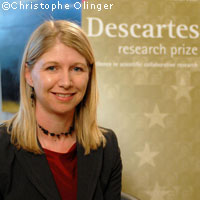
As some teenagers see science as a scary subject, one company is trying to redress that image in a quest to inspire the next generation of scientists. One of the winners of the EU Descartes Prize for Science Communication, the Science Made Simple company, offers a selection of inspirational and educational experiences aimed at teenagers. Its director, Wendy Sadler, says her mission is to inspire the next generation of scientists by promoting science as part of popular culture and translating the complex phenomena of science into a language that children and teenagers can understand. The company has developed a range of creative science performances that spark an interest in science by starting with the things that people are already interested in, such as music, sports and gadgets, and then 'sneaking in the science by stealth'. She told CORDIS News: 'We try to make science accessible to young people by connecting science and their areas of interest. It is between the ages of 11 and 18 that teenagers could choose to embark on a career in science so it is crucial that we make science fun and exciting then.' Reaching out to about 30,000 students a year, the team is about to take science to the road with its latest production, 'Visualise - The Beauty of Science', which blurs the boundaries between theatre, art and science by performing experiments set to music with no words spoken. By offering more exploration than explanation, the company hopes to tap into the emotions of the audience, enabling them to make their own connections and have their curiosity sparked. In addition, the all-female group is interested in reversing the stereotypes by promoting science and engineering to girls. It has developed special presentations for this purpose, showcasing female scientists at work. Ms Sadler said: 'We want to get away from the image of the mad scientist and bring it down to Earth. We want science to have a broad appeal, even to people who may not choose to pursue science as a career path.' As a winner of the Descartes Prize for Science Communication in the category of 'innovation action for science communication', the project could be an idea whose time has come, and has the potential to be rolled out across the EU. In his speech at the award ceremony, EU Science and Research Commissioner, Janez Potocnik, said: 'The people who can bridge that divide [between science and the public] deserve our recognition [...]. This is an increasingly important area in the EU as we have a shrinking population, fewer school children choosing science subjects and a worrying replacement rate for existing scientists.' 'We can't expect this situation to change without better communication,' he added.
Countries
United Kingdom