


UK researchers develop technique to detect electrical signals in living cells
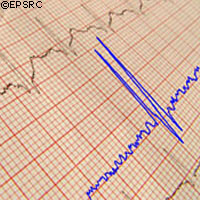
Researchers from the University of Manchester in the UK have succeeded in detecting the electrical signal of a dying yeast cell. The technique is expected to enable scientists to monitor the 'heartbeat' of living cells and develop new ways of testing drugs. All cells in living organisms transfer electrically charged particles called ions across their membranes to other cells. This is an important process, since it allows cells to communicate with one another and effectively stay alive. Detecting the electrical activity of certain areas of the human body is already an established part of medical diagnostic procedures. Electrocardiograms and electroencephalograms are widely-used techniques to monitor heart and brain activity respectively. The UK researchers set about trying to develop a technique which could monitor individual cells on a daily basis, in a similar way to how a cardiograph observes the functioning of the heart. Using an apparatus intended to monitor the magnetic field in semiconductors, the researchers tried to detect the activity of a single yeast cell. To do so, they altered the temperature range of the apparatus and, because yeast requires water to live, they also made modifications to enable the apparatus to work while immersed in water. However, due to the reduced sensitivity of the apparatus, the researchers were unable to detect any activity. To generate a response in the yeast cell - an organism known to be somewhat subdued - the researchers added ethanol to the experiment. 'Ethanol is known to increase the transparency of cellular membranes which we hoped would give a signal we could detect,' says Dr Irina Barbolina, who carried out the experiments. The addition of ethanol proved successful and the researchers were able to detect a signal. The signal was the smallest yet to be observed in a living cell, around 100 times smaller than anything previously detected But the researchers added so much alcohol that it poisoned and killed the cell. 'It was probably the last gasp of the dying cell,' says Professor Andre Geim, who led Manchester team. The team is however confident that by modifying their technique, they can come up with an effective way of detecting electrical signals in living cells. 'We already have some ideas about how to improve the sensitivity of the detector in water and next time we will also use a more active micro-organism such as an amoeba,' says Professor Geim. 'Probably, the most important outcome is that we defined an important goal. Cellular cardiograms can no longer be seen as absurd or science-fictional.' Knowing the average pattern of electrical activity in a cell will allow researchers to see how different drugs affect it. This could result in the development of early safeguards for testing drugs. In addition, the electrical activity test could be used to monitor the effects of pollution on naturally occurring micro-organisms in the environment.
Countries
United Kingdom