


Potocnik calls for more flexible approach to knowledge transfer
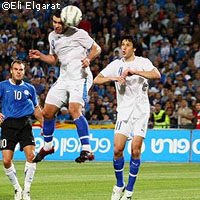
As in football, where every player must learn to play each position on the field, so too must Europe's research actors become more flexible and challenge the traditional model of the knowledge triangle, Commissioner for Science and Research Janez Potocnik has said. Speaking at a conference in Munich on 4 May, the Commissioner compared the traditional football line-up (defence, midfield and attack) with that of the current view of the knowledge triangle, which comprises education, research and innovation. Universities, research and technology organisations (RTOs), and industry are responsible for each of the respective corners of the triangle. 'RTOs would traditionally be in the midfield, linking the defence and attack - or education and industry. Like the midfield players in football, RTOs can see things from both sides - they can appreciate what's behind them, like early stage development, and understand what's needed in front of them, from innovating companies,' explained Mr Potocnik. In the 1970s, the Dutch national football team transformed the game into 'total football', which ended the strict roles for each player, and no longer limited a player to remaining in defence, midfield or attack. This made the game more competitive and attractive. Mr Potocnik believes that the same level of flexibility is needed in the European research community. 'We can no longer say that certain roles are only performed by those who traditionally did them,' he argued. The face of research is changing fast due to the globalisation of markets and industries, which have changed business research practices. For example, recent Commission data indicates that 10% of business research and development (R&D) is outsourced. Other factors influencing these changes are the emergence of new technologies and therefore new disciplines, and the move from national problems to global challenges such as climate change, health and security. 'We cannot rely on traditional models of research alone to tackle these needs - and remain competitive. We need to change with the world around us, so that research results are brought to market more quickly and efficiently - both in industry and in the public sector,' said the Commissioner. The Commission is making strides to bring about this change. In April, it published a communication, setting out its views on improving knowledge transfer between businesses and research organisations. It proposes, among other actions, tackling the differences in legal frameworks governing the mobility of researchers and flow of knowledge; EU wide training for Knowledge Transfer Officers; and the pooling of university resources. But the Commission does not just want to talk about increasing knowledge transfer: we also want to make it happen, said Mr Potocnik. He pointed to the European Institute of Technology (EIT) as a major example of putting 'policy into practice'. Once details such as financing and structure are clarified, work will start to launch the call for the first Knowledge and Innovation Community at the beginning of next year, the Commissioner announced. 'This will be a major step forward in bringing the knowledge triangle closer together,' he added. Other initiatives sure to improve knowledge transfer in Europe are the relaunch of the ERA and the Community Patent, for which Mr Potocnik said some headway was being made, particularly with regard to a unified patent judiciary. The Commissioner concluded by coming back to football. 'Europe transfers football talent very effectively - now we have to start doing it better in knowledge.'