


Commission puts forward plans for nanoelectronics JTI
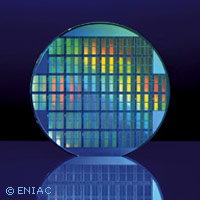
Nanoelectronics are the subject of the latest Joint Technology Initiative (JTI) to be put forward by the European Commission. The new JTI will pave the way for new products and services in a range of areas, including consumer electronics, the automotive industry, healthcare and environmental management. Called ENIAC (European Nanoelectronics Initiative Advisory Council), the initiative will have a budget of €3 billion, 60% of which is expected to come from industry, with the remainder coming from the European Commission and countries involved in the project. Semiconductor chips are found in many of the products we use in our daily lives, including mobile phones, televisions, medical devices and cars. Over the years, advances in technology have enabled the electronics industry to integrate circuitry into ever smaller silicon chips. For a long time, these components could be measured in microns (hence the term 'microelectronics'), but now researchers are able to create circuits whose features can be measured in nanometres, leading to the use of the term 'nanoelectronics'. At these minute scales, substances have different properties. This means that electronics researchers are faced with the challenge of exploiting these new properties to create smaller, cheaper and faster devices, while minimising any unwanted side-effects. Meeting these challenges will require vast amounts of research to develop new materials, processes and equipment. 'Semiconductor chips are the engine of the information revolution,' said Viviane Reding, EU Commissioner for Information Society and Media. 'They are continuously shrinking in size but growing in power and performance. This is a race in which Europe must look to new nanoelectronic techniques to keep up.' Nanoelectronics are expected to have an impact in many areas of our lives, as more and more functions are integrated into everyday products. For example, in an 'intelligent home', nanoelectronic devices could be used to regulate energy use, while in cars additional built-in electronics could allow for more assisted driving. In the medical field, new systems could enable patients to be monitored and even treated at home. In the environmental management sector, networks of small, cheap devices could be used to monitor pollution and other environmental risks. However, for Europe to get ahead in this emerging field, it is vital that researchers, businesses, small and medium sized enterprises (SMEs) and other stakeholders work together to pool resources and work towards common goals. The goal of the JTIs is to make these large-scale, Europe-wide public-private partnerships easier and to create incentives for businesses to fund research and development. 'Together with industry and Member States, the new Joint Technology Initiative launched by the Commission today will ensure Europe maintains its lead in this field, guaranteeing growth and jobs for future generations,' said Commissioner Reding. The ENIAC JTI will be run by a Joint Undertaking. The industrial partners will be represented by AENEAS, a non-profit association which is open to industries, businesses, research institutes and associations active in the nanoelectronics field.