


Potocnik calls for more exchanges between industry and academia
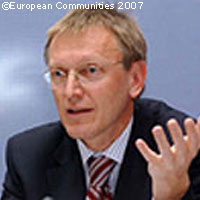
In order to provide the EU's citizens with prosperity, a sound environment and a fair society, Europe has to become the most dynamic knowledge-based economy in the world, EU Science and Research Commissioner Janez Potocnik told participants at the first Marie Curie Partnerships and Pathways conference for Industry and Academia, on 14 January. To achieve the goal of sustained economic growth in the face of increasing globalisation and competition, the Commissioner highlighted the importance of the relationship between academia and the private sector for the creation and application of new knowledge. 'Innovation for sustainable development will only be achieved with the creation and application of new knowledge. And our universities and public research organisations are a primary source of that new knowledge,' Mr Potocnik stated. 'By strengthening the relationship between academia and the private sector, we can accelerate the development of new and improved products, processes and services. And it is vital that we do so to ensure our continued economic growth,' he said. For the Commissioner, by working side by side with universities and public research institutions, industry can make big gains through access to the intellectual and material resources of academia, including the possibility of approaching scientific problems from novel angles. 'Furthermore, academia can provide essential capabilities in research and development in support of pilots, prototypes or concepts that lead to products and profits. In their turn, universities and institutes can benefit from ideas for and material support to their endeavours, while gaining experience and insights into management practices,' the Commissioner said. This win-win approach is key to the Marie Curie Industry-Academia Partnerships and Pathways action under the Seventh Framework Programme (FP7). It is providing €400 million between now and 2013 to reinforce partnerships between public and private research organisations, based on a common research project, and promoting the exchange of skills and knowledge by supporting staff mobility between the public and private sectors. The scheme is only one of many industry-academia collaboration activities under FP7. From the 30 industry-led European technology Platforms (ETP) to the Europe-wide public-private Joint Technology Initiatives (JTIs), the Commission has been encouraging and supporting such partnerships as a way of fostering world class science and developing European competitiveness and quality of life. Finally, Mr Potocnik pointed to other Commission initiatives such as the European Institute of Innovation and Technology (EIT). The new body will comprise a network of private companies, universities and research organisations that will aim to foster knowledge and innovation communities, as well as the adopt an innovation strategy that addresses the question of state aid for research and development (R&D), venture capital, tax incentives, European patents and lead markets. 'In all these ways, the Commission seeks to encourage relationships between the private and public research activities that Europe needs to succeed,' Mr Potocnik concluded.