


Computer surgery for high-tech health arrives
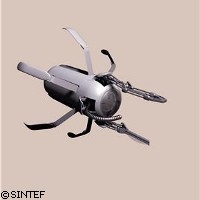
Two new highly sophisticated methods for monitoring keyhole surgery and detecting disease have been developed that could revolutionise diagnostic techniques and surgery. One method uses state-of-the-art computer science to help surgeons pinpoint the exact position of a diseased cell and the other is a computer-monitored capsule that can travel through the body searching for signs of illness. A 10-year scientific collaboration has resulted in the creation of a new form of IT-based surgery that can make the inside of a patient's body transparent on a screen during an operation. The surgery uses technology that transforms X-rays and ultrasound into three-dimensional (3D) maps displayed on a screen that surgeons can use to navigate within the body when performing keyhole surgery. The technique will allow surgeons to use keyhole surgery more often in preference to traditional surgery, as it will be far less stressful for patients and will mean less time in hospital. Operations will also be much safer using the new technology, as surgeons will be able to see exactly where a tumour is situated in relation to blood vessels and nerves. 'With a better view of vital organs and blood vessels, a surgeon can perform keyhole surgery with an extra high margin of safety and can employ it much more often than before to remove tumours in organs that would not otherwise be easily accessible to keyhole interventions, such as the kidneys, the adrenal glands or the pancreas,' explained Dr Thomas Langø, a senior scientist at the Norwegian research institute SINTEF, the largest independent research organisation in Scandinavia. Dr Langø worked in collaboration with senior medical officer Ronald Marvik from St Olav's hospital in Trondheim, Norway. SINTEF, along with 17 other European partners, is also currently working on the development of another revolutionary medical technique: a capsule that, when swallowed, moves through the digestive system detecting illness and diseased cells. Such capsules already exist, but the version being developed by SINTEF offers an improvement because it can be monitored and controlled by a computer system that allows the capsule to stop or go into reverse when something in the body needs closer attention. The capsule will have sensors that are based on ultrasound, spectroscopy and possibly biosensors. It will also be able to collect tissue samples. Moving through the digestive system, the capsule will have the capacity to pick up early warnings of serious diseases such as colorectal cancer, thus possibly saving many more lives than with the existing methods of diagnosis. Dr Langø said of the capsule project, known as Vector: 'We are working on the navigation system that will make it possible to know exactly where the capsule is in the digestive system at any given time and control it to perform various operations. 'The greatest challenge lies in finding room for everything we need within the capsule without it becoming too big to be swallowed. If everything goes according to plan we will be able to "open wide" for the smart pill in about four years' time.'
Countries
Norway