


Parkin protein protects neurons and their energy supply
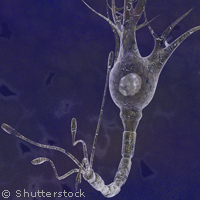
Recent research has revealed that defects in Parkinson-associated genes are the cause of approximately 10% of Parkinson's disease (PD) cases, while other studies have shown that damaged mitochondria (which are often described as the power plants of cells) could be another cause. A new study by researchers in Germany connects both phenomena, effectively showing the importance of two Parkinson-associated genes in maintaining mitochondrial function. The results are published in the Journal of Biological Chemistry. 'Diseases like Parkinson's, where at least some cases are unambiguously related to the dysfunction of specific genes, offer a promising research opportunity,' explained biochemist Dr Konstanze Winklhofer of Ludwig-Maximilians-Universität (LMU) in Munich. 'When we understand the function of these genes, we can learn a lot about the causes of the disease, its progress and possible new therapies.' PD is caused by the degeneration of neurons in the area of the brain that controls movement. An estimated 4 million people worldwide suffer from the disease, symptoms of which include uncontrollable tremor, muscle rigidity, slowness (or loss) of movement and a stooped posture. The neurons affected are located in the substantia nigra and normally secrete a neurotransmitter called dopamine; the loss of movement control is due in some part to a dopamine imbalance. The exact causes of PD are not known, and the mechanisms by which these neurons are killed off are not fully understood. PD sufferers are thought to have an unlucky combination of genetic predisposition and a history of exposure to certain environmental factors. The disease normally affects individuals between 60 and 70 years of age, but mutations in the parkin-expressing gene have been associated with early-onset PD. In the current study, Dr Winklhofer and her team looked specifically at the relationship between two genes commonly associated with PD and their effect on mitochondria. 'Functionally impaired mitochondria have been recognised to trigger Parkinson's disease [since] the early 1980s,' explained Dr Winklhofer. Previous studies have shown that mitochondria, which produce energy and regulate cell death, are implicated in the loss of dopamine-producing neurons. The scientists focused on the relevance of the PD-associated gene PINK1 and parkin in maintaining mitochondria. Previous studies have shown that loss of PINK1 function leads to mitochondrial damage. In this latest research, the scientists found that the protein parkin itself plays a role in maintaining mitochondrial integrity. They also found that loss of function in either PINK1 or parkin causes mitochondria to break apart, which in turn leads to a loss of energy production. 'Our results also confirm the high neuroprotective potential of parkin,' said Dr Winklhofer. 'We observed that parkin can compensate a loss of PINK1 function, but not the other way round.' The findings shed further light on the role of parkin, which was found in previous studies to protect neurons under stress. The study also showed that if parkin or PINK1 become overactive in human cells, this does not cause the mitochondrial to break apart. This is in contrast with previous findings in studies of these same factors in fruit flies. The authors speculate that one reason for this might be that insects and humans might eliminate dysfunctional mitochondria differently. Current PD therapies focus on treating symptoms by replacing dopamine. Understanding how PD-associated genes work will hopefully enable researchers to identify new therapeutic targets that could prevent the loss of dopamine-producing neurons. Future studies, the study reads, will seek to understand the functional interplay between PINK1 and parkin as well as the compensatory pathways that swing into action in the absence of proper PINK1 and parkin function.
Countries
Germany