


Going bananas for plastic!
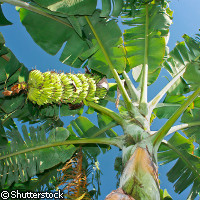
Around 25,000 tonnes of banana plants are dumped in the ravines of Spain's Canary Islands following the fruit's harvesting each year. But now EU-funded researchers are working on a new technique that should make it possible to use these plants to produce plastic goods. The ground-breaking results will help Europeans in their quest to develop new and sustainable means of materials production. The research is part of the EU-funded BADANA ('Development of an automated process to extract fibres from the waste of banana food production for exploitation as a sustainable reinforcement in injection - and rotomoulded products') project, supported under the 'Research for the benefit of SMEs [small and medium-sized enterprises]' Theme of the EU's Seventh Framework Programme (FP7). The two-year project, which kicked off in July 2009, has received EUR 1 million in financial support. Participating in the project is the Polymer Processing Research Centre at Queen's University Belfast in the UK. The group's researchers are working on devising new procedures to incorporate by-products from the Canary Islands' banana plantations so as to manufacture rotationally moulded plastics. Rotational moulding is a process that is generally used for making hollow objects like dolls and household items. 'Almost 20% of the bananas consumed in Europe are produced in the Canary Islands, with around 10 million banana plants grown annually in Gran Canaria alone,' explained Mark Kearns, manager of Rotational Moulding at the Polymer Processing Research Centre. 'Once the fruit has been harvested, the rest of the banana plant goes to waste,' he added. 'The BADANA project aims to find a use for these plants. The natural fibres contained within them may be used in the production of rotationally moulded plastics, which are used to make everyday items such as oil tanks, wheelie bins, water parks, traffic cones, plastic dolls and many types of boats,' Mr Kearns said. 'The banana plant fibres will be processed, treated and added to a mix of plastic material, and sandwiched between two thick layers of pure plastic providing excellent structural properties. The project gives a whole new meaning to 'banana sandwich'.' Not only will SMEs benefit from this development, but the environment will thrive as well. Mr Kearns pointed out that this advanced technique will generate a significant drop in the amount of polyethylene used in the rotational moulding process. The end result will be a 'new and more sustainable era in the production of rotationally moulded plastics'. In addition, the technique developed by BADANA will help boost the profit margin of the plantation owners, who will soon be able to sell the remains of millions of harvested banana plants that would normally go to waste. Finally, the initiative should lead to the creation of new jobs in the region. Besides the UK, the BADANA project has brought together researchers from Bulgaria, Spain and Hungary.
Countries
Bulgaria, Spain, Hungary, United Kingdom