


Solar energy powers north African fridges
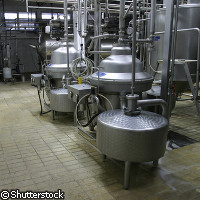
An EU-funded project has successfully installed a dedicated solar plant to cool perishables in a Tunisian winery and a Moroccan dairy, demonstrating the economic sustainability of solar-driven refrigeration. The thermally driven cooling concept could substantially benefit the food and agriculture industry in the Mediterranean region. The technology was developed and implemented by the MEDISCO ('Mediterranean food and agro industry applications of solar cooling technologies') project, which was financed with EUR 1.4 million under the International Cooperation budget line of the Sixth Framework Programme (FP6). Solar energy is often used to power air-conditioning systems in buildings, but its potential to power industrial cooling systems has not been widely tested. The MEDISCO project partners assessed which solar-powered cooling options would best suit the technological and economic capacities of the food and conservation industries in Egypt, Morocco and Tunisia. Following an analysis of the sectors' energy needs, they developed a novel, high-performance, solar-driven cooling and refrigeration concept. Their system was recently constructed and installed in two experimental set-ups, one in Morocco and one in Tunisia. The set-up consists of concentrating collectors that direct the sunlight onto an absorber by means of a reflector. The solar radiation then heats water to 200°C, which drives the absorption-refrigeration machine. 'We do not use electricity to provide the refrigeration, we use heat,' explained Dr Tomas Núñez of the Fraunhofer Institute for Solar Energy Systems in Germany. The system cools using a water-glycol mixture so that ice doesn't clog the system at sub-zero temperatures. In the dairy system, the mixture is collected in 'cold accumulators' and pumped through a heat exchanger, which cools the milk. 'We use a slightly different system for wine, with the refrigerant flowing through coiled pipes in the wine tanks,' explained Dr Núñez. 'Our method is ideal for countries which have many days of sunshine and in remote areas where there are no conventional means of refrigeration owing to a lack of water and non-existent or unreliable energy sources,' Dr. Núñez stated. 'It is environmentally friendly and reduces the use of expensive electricity for conventional refrigerators to a minimum. Refrigeration is always available when the sun shines, which means that it is produced at the times when demand is at its highest.' The MEDISCO cooling system is a demonstration project, and the operations will be carefully monitored to optimise the new technology. According to Dr Núñez, 'The system is not yet ready for the market, but I am certain it will be possible in future to use solar refrigeration on farms and in the chemical and cosmetics industries.' Run by the Polytechnic University of Milan, Italy, MEDISCO project partners include universities, small businesses and energy agencies in Egypt, France, Germany, Morocco, Spain and Tunisia. The Mediterranean Renewable Energy Centre (MEDREC), based in Tunisia, is helping pass on the knowledge and experience gained within the project.
Countries
Germany, Morocco, Tunisia