


Sheep study reveals cost of strong immune system
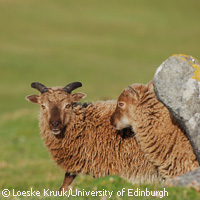
Having a strong immune system may increase an animal's lifetime but lead to lower fertility, according to a new study by scientists in the UK and US. The findings, published in the journal Science, offer clues as to why some people are more prone to infections than others. There is a lot of variation in the strength of people's immune systems. The question is why evolution has not weeded out the genes associated with a weaker immune system. One possible answer is that a strong immune system may come at a price in the form of reduced fertility. 'We have long suspected that strong immune responses should prolong life in the face of infections, but might also be costly to reproduction,' explained Andrea Graham of the University of Edinburgh in the UK and Princeton University in the US. 'To find evidence for such a trade-off may clarify why animals vary so much in the strength of their immune responses, and even in their predisposition to infection or autoimmunity.' To get to the bottom of the matter, Professor Graham and her colleagues studied wild Soay sheep on the remote, uninhabited island of Hirta in the St Kilda archipelago which lies some 160 kilometres (km) off the west coast of Scotland. Every August for 11 years, the researchers collected blood samples from the animals and noted how many lambs each sheep had had and how long the animals lived. The team was interested in the levels of antibodies in the animals' blood; sheep with high levels of antibodies have stronger immune systems and are better equipped to fight off parasitic infections, which are extremely common among Hirta's sheep. The investigation revealed that sheep with high antibody levels lived the longest and were most likely to survive particularly harsh winters. However, they were less likely to produce offspring compared with other animals. In contrast, sheep with relatively low antibody levels gave birth to more lambs every year but had a shorter lifespan than sheep with high antibody levels. In fact, from an evolutionary point of view, both groups were equally successful, producing around the same number of offspring over the course of their lives. According to the researchers, this could help explain why immunity varies so strongly among individuals. Furthermore, the tendency towards stronger or weaker immune systems appears to run in families. 'This genetic basis means that natural selection has the chance to shape the trait,' commented Professor Graham. In addition, the findings suggest that autoimmunity, in which the immune system is so strong that it attacks the body's own tissues, may exist in the wild. Until now, autoimmunity has only been observed in people and in laboratory, domestic and captive mammals. Further research is needed to investigate this further, the scientists say. Lynn Martin of the University of South Florida in the US, who was not involved in the study, notes that the researchers' use of wild animals is significant. 'For so long, the field of immunology has been based on studies of domesticated animals in clean lab environments where animals are given all the food they want, shelter from the elements and few to no challenges with parasites,' she said. 'These conditions are great to get at the details of how hosts are dealing with parasites at the molecular and cellular level, but they're not representative of natural conditions and may bias our understanding of immune functions.' Crucially, the findings help explain why some people suffer more than others when exposed to infections and why vaccines are more effective in some people.
Countries
United Kingdom, United States