


Energy vital to evolution of complex life
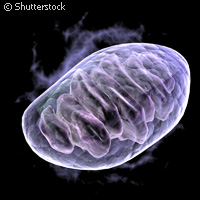
German and UK researchers have put forward a radical new theory for the evolution of complex life, suggesting that it is dependent on mitochondria, the tiny power stations found in cells known as eukaryotes, which include all complex life on our planet including animals, plants, fungi and algae. The research, funded in part by the EU, was recently presented in the journal Nature. Scientists have long believed that the evolution of nucleus was the key to complex life. However, Dr Nick Lane from University College London (UCL) in the UK and Dr William Martin from the University of Düsseldorf in Germany, believe instead that mitochondria played a crucial role in the development of complex innovations like the nucleus because of their function as power stations in the cell. 'The underlying principles are universal,' said Dr Lane from UCL's Department of Genetics, Evolution and Environment. 'Energy is vital, even in the realm of evolutionary inventions. Even aliens will need mitochondria.' According to Dr Lane, their discovery 'overturns the traditional view that the jump to complex eukaryotic cells simply required the right kinds of mutations', nothing that the evolution from simple prokaryotes, such as bacteria, 'actually required a kind of industrial revolution in terms of energy production'. Dr Lane explained that at the level of our cells, humans have far more in common with mushrooms, magnolias and marigolds than with bacteria because we share complex cells with specialised compartments including an information centre, the nucleus, and mitochondria. These eukaryotes all share a common ancestor that emerged just once in 4 billion years of evolution. The researchers demonstrated how eukaryotes accumulate their extra genes and proteins, while bacteria do not bother. By focusing on the energy available per gene, the researchers showed that an average eukaryotic cell can support an astonishing 200,000 times more genes than bacteria. 'This gives eukaryotes the genetic raw material that enables them to accumulate new genes, big gene families and regulatory systems on a scale that is totally unaffordable to bacteria,' said Dr Lane. 'It's the basis of complexity, even if it's not always used.' He also pointed out that 'bacteria are at the bottom of a deep chasm in the energy landscape, and they never found a way out,' adding that 'mitochondria give eukaryotes four or five orders of magnitude more energy per gene, and that enabled them to tunnel straight through the walls of the chasm.' The researchers also discovered why bacteria are unable to compartmentalise themselves to gain the advantages of having mitochondria. The answer lies in the tiny mitochondrial genome, they said, adding that these genes are needed for cell respiration, and without them eukaryotic cells die. If cells get bigger and more energetic, they need more copies of these mitochondrial genes to stay alive. Bacteria face exactly the same problem. They can deal with it by making thousands of copies of their entire genome, but all this DNA (deoxyribonucleic acid) has a big energetic cost that cripples even giant bacteria and stops them from turning into more complex eukaryotes. 'The only way out is if one cell somehow gets inside another one - an endosymbiosis,' said Dr Lane. However, while cells within cells are common in eukaryotes, which often engulf other cells, they're vanishingly rare in more rigid bacteria. And that, the researchers concluded, may well explain why complex life only evolved once in all of Earth's history.
Countries
Germany, United Kingdom